Your data skills can help answer some of the most important questions in human health

Health data can reveal patterns in disease, predict patient outcomes, and inform life-changing decisions.

But finding a pattern is only the beginning:


  • Can the result be trusted?
  • Does it apply across different populations?
  • Could bias in the data affect the conclusion?
  • And how should uncertainty shape the decisions that follow?

That's where BIOSTATISTICS and HEALTH DATA SCIENCE come in.

Hello Kyle,


Your academic coursework is preparing you to organize complex information, build computational tools, and uncover patterns that might otherwise remain hidden.


At Michigan Biostatistics, graduate study can prepare you to transform complex health data into credible evidence and answer questions with direct consequences for human health.


In biostatistics and health data science, researchers combine computational methods with statistical reasoning to determine not only what the data show, but what the evidence allows us to conclude. They develop predictive models that help explain disease progression, identify patients at greater risk, anticipate treatment response, and evaluate which interventions may work best for different populations.


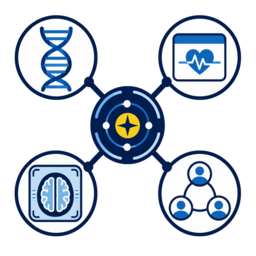
Their work spans nearly every form of modern health data. Biostatisticians analyze electronic health records to uncover patterns in care and outcomes, study genomic data to identify factors associated with disease, use medical images to improve detection and diagnosis of cancer, and integrate information across clinical studies and entire populations. They also adapt machine-learning methods for healthcare—evaluating whether algorithms are accurate, reproducible, interpretable, fair, and appropriate for the decisions they may influence.


That work might include:

Adapting machine-learning methods for healthcare applications

Identifying genes associated with disease risk

Predicting patient outcomes using high-dimensional health data

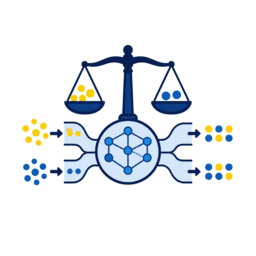
Detecting and addressing bias in health algorithms

Integrating genomic, clinical, imaging, and population health data

Building reproducible tools for large biomedical datasets

At the University of Michigan, you can pursue this work through three distinct graduate pathways:


  • MS in Health Data Science, with its strong computational and machine-learning focus
  • MS in Biostatistics, combining rigorous statistical training with applied health research
  • PhD in Biostatistics, preparing students to develop new methods and lead original research.


If you enjoy using code to solve complex problems—but also want to understand what makes an analysis rigorous, credible, and useful—biostatistics could be your next step.

Interested in learning more about biostatistics?
 
 
Facebook  Youtube  
THIS IS A TEST EMAIL ONLY.
This email was sent by the author for the sole purpose of testing a draft message. If you believe you have received the message in error, please contact the author by replying to this message. Constant Contact takes reports of abuse very seriously. If you wish to report abuse, please forward this message to [email protected].
©