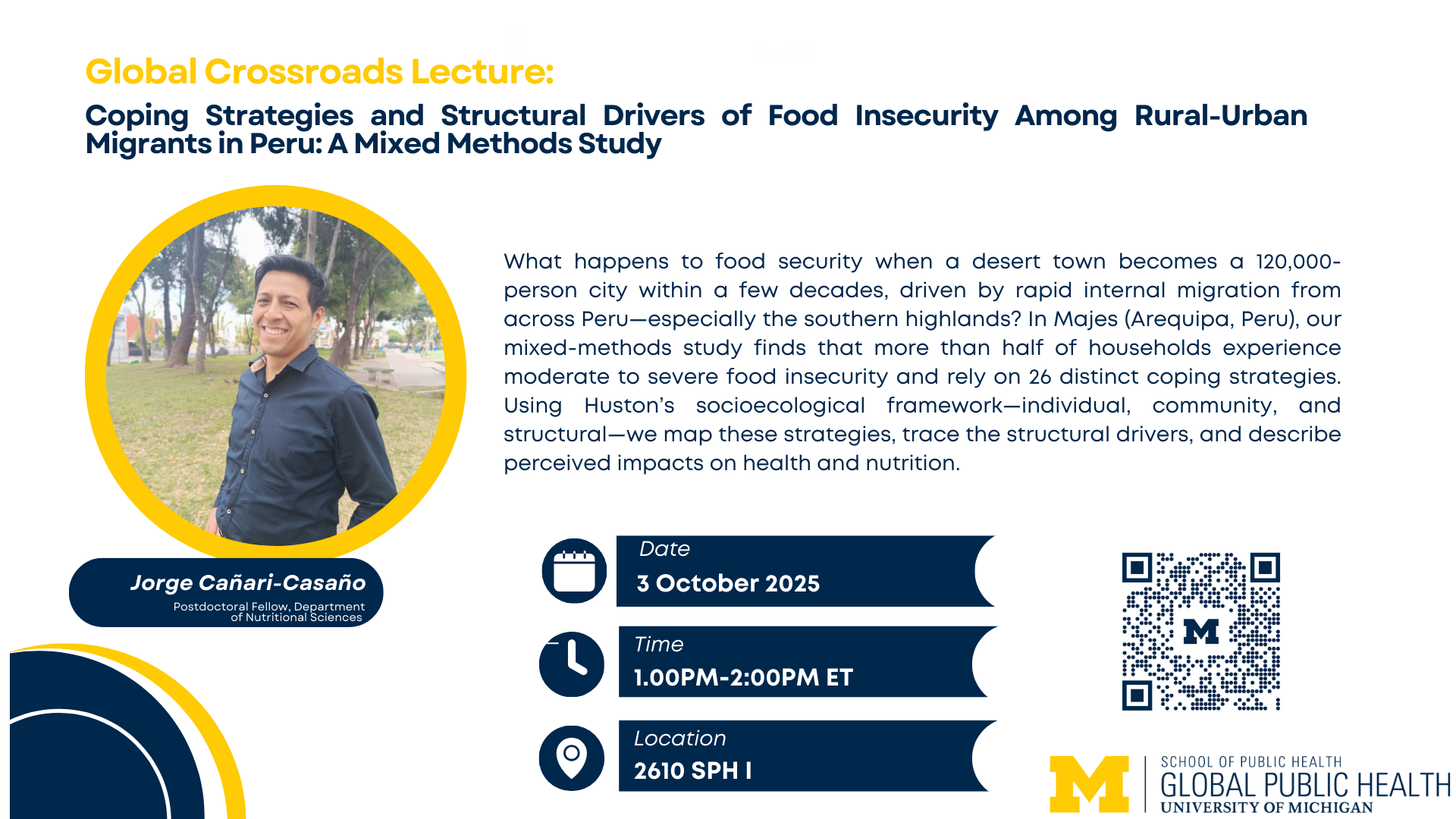
What happens to food security when a desert town becomes a 120,000-person city within a few decades, driven by rapid internal migration from across Peru—especially the southern highlands? In Majes (Arequipa, Peru), our mixed-methods study finds that more than half of households experience moderate to severe food insecurity and rely on 26 distinct coping strategies. Using Huston’s socioecological framework—individual, community, and structural—we map these strategies, trace the structural drivers, and describe perceived impacts on health and nutrition.
Jorge Cañari-Casaño is a nutritionist, epidemiologist, and a Postdoctoral Research Fellow in the Department of Nutritional Sciences at the University of Michigan School of Public Health. His work focuses on food insecurity, water insecurity, migration, and health equity in Peru and Latin America. He leads a mixed-methods study in Majes examining coping strategies and the structural drivers of food insecurity.
Hosted by
Office of Global Public Health