
Current and Past IRTHA Trainees
Current Predoctoral Trainees
 Nita Kanney, Department of Epidemiology (2026-2028): As an IRTHA trainee, Nita Kanney investigates DNA methylation as a potential pathway
of embodiemnt from social and environmental exosures across the life course to later
life aging-related outcomes using longitudinal survey and biological measures from
a nationally representative panel cohort of older adults in the Health and Retirement
Study (HRS). Her doctoral dissertation explores associations of early life social
factors and midlife residential proximity to industrial pollution with later life
differences in DNA methylation, including the biological mechanisms that may underlie
these differences. This research seeks to provide insight into how early life conditions
and environmental exposures shape patterns of healthy aging.
Mentor: Kelly Bakulski
 Muhammad Zia ul Haq, Department of Epidemiology (2026-2028): As an IRTHA trainee, Zia is investigating how the amount of rehabilitation therapy
received after stroke relates to functional recovery and whether the benefits of higher-intensity
therapy differ across clinical and sociodemographic groups. For his doctoral dissertation,
he is using data from the population-based Brain Attack Surveillance in Corpus Christi
(BASIC) study linked with Medicare claims, together with national Medicare inpatient
rehabilitation data, to characterize therapy dose-response relationships and evaluate
the cost-effectiveness of increasing rehabilitation intensity.
Mentor: Lynda Lisabeth
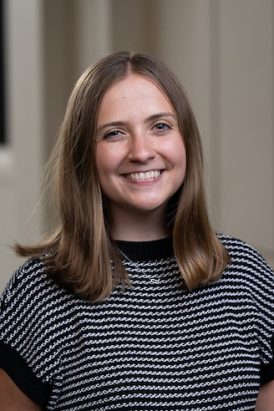 Sydney Adams, Department of Psychology (2026-2028): As an IRTHA trainee, Sydney is currently investigating longitudinal associations of
cumulative life-history of mental-health difficulties with physical injuries in midlife
using the Dunedin Multidisciplinary Health and Development Study. Her doctoral dissertation
will examine links between social determinants of health, mental-health difficulties,
and later-life cognitive and physical health in multiple data sources, including nationwide
administrative health records and longitudinal panel studies.
Mentor: Leah Richmond-Rakerd
 Marielynn Herrera, Department of Epidemiology (2026-2028, Honorary Trainee): As an IRTHA, Marielynn Herrera is investigating how work experiences, including work-related
injuries and precarious employment, shape cognitive health among older adults, with
special attention to populations experiencing structural barriers. Another aim of
this research is to examine how changing immigration policy or immigration status
influences work-related injuries and precarious employment among older immigrants.
To address these aims, Marielynn will use the Health and Retirement Study, a nationally
representative longitudinal study of U.S. adults aged 50 and older.
Mentor: Kelly Bakulski
 Lauren MacConnachie, Department of Epidemiology (2025-2027): As an IRTHA trainee, Lauren MacConnachie's doctoral dissertation investigates the
dynamic associations between family caregiving, socioeconomic status, and physical
and cognitive functioning across women's midlife and older adulthood. Her research
utilizes longitudinal data from the Study of Women’s Health Across the Nation (SWAN)
to examine how patterns of caregiving intersect with socioeconomic status to influence
both cognitive and physical functioning over time. By leveraging advanced epidemiologic
methods, her work aims to shed light on the health impacts of caregiving and inform
public health strategies to better support caregivers.
Mentor: Carrie Karvonen-Gutierrez
 Nia Myfanwy Clements, Departemnt of Epidemiology (2025-2027): As an IRTHA trainee, Nia is investigating aging-related disease burdens due to pesticide
exposure in non-agricultural and agricultural populations. Using data from the National
Health and Nutrition Examination Survey (NHANES) and Health and Retirement Study (HRS),
she plans to model pesticide exposure and characterize the association between personal
pesticide exposure and both cognitive/physical declines and disability in late life
for her doctoral dissertation.
Mentor: Sara Adar
 Joshua Foster-Tucker, Department of Epidemiology (2025-2027): As an IHRTHA trainee, Joshua Foster-Tucker is investigating human parainfluenza virus
(HPIV) clinical epidemiology and risk factors for HPIV household transmission, as
well as the epigenomics of immune response to repeat influenza virus vaccination and
its potential protective effect on biological aging. Mr. Foster-Tucker’s research
benefits from nearly 15 years of data collected by the Ann Arbor-based prospective
Household Influenza Vaccine Evaluation cohort study of households with children, which
is based at the School of Public Health and overseen by Drs. Emily T. Martin and Arnold
S. Monto.
Mentor: Emily T. Martin
Past Predoctoral Trainees
 Jillian Baker, Department of Epidemiology (2024-2025): As an IRTHA trainee, Jillian Baker is examining the functional and endocrine effects
of intimate partner violence in the Study of Women's Health Across the Nation (SWAN)
for her doctoral dissertation. SWAN is a multi-ethnic, multi-site cohort study that
has followed women for nearly 30 years, through and beyond the menopausal transition.
The T32 has also supported Jillian to investigate the link between partner violence
and cognition, sleep and fall risk, physical function and cognitive function, and
environmental exposures and health within SWAN.
Mentor: Dr. Carrie Karvonen-Gutierrez
Chelsea Cox, Department of Heath Behavior & Health Equity (2023-2025): As an IRTHA trainee, Chelsea investigated multi-level factors that contribute to underdiagnosis of Alzheimer’s disease and related dementias. For her dissertation, Chelsea used the National Poll on Healthy Aging and the Health and Retirement Study, large national surveys based at the University of Michigan, to examine barriers to screening and timely diagnosis in diverse cohorts of older U.S. adults.
Mentor: Dr. Scott Roberts
Current Position: Doctoral candidate, University of Michigan School of Public Health
Kallisse Dent, Department of Psychology (2023-2024): As an IRTHA trainee, Kallisse investigated the relevance of the interpersonal theory of suicide in older adults with newly diagnosed chronic health conditions. She used the Health and Retirement study to test the mediating roles of thwarted belongingness, perceived burdensomeness, and hopelessness in the associations of newly diagnosed chronic health conditions with depression and passive suicidal ideation. Kallisse is building on this work for her doctoral dissertation, focusing on the impact of cognition and dementia diagnoses on suicide risk.
Mentors: Dr. Leah Richmond-Rakerd, Dr. Briana Mezuk
Current Position:
Linh Dang, Department of Epidemiology (2022-2024): As an IRTHA trainee, Linh Dang examined the associations between work expectations and psychological distress among the "Baby Boom" generation in the United States and South Korea, using data from the Health and Retirement Study and the 2016 Korean Longitudinal Study of Aging.
Mentor: Dr. Briana Mezuk
Current Postion: Research Associate, University of Michigan School of Public Health
Laura Brotzman, Department of Health Behavior & Health Education (2021-2023): As an IRTHA trainee, Laura Brotzman conducted a mixed methods investigation of older adult perspectives on use of life expectancy information to guide cancer screening decisions for her doctoral dissertation. Laura co-designed and analyzed data from a National Poll on Healthy Aging module and conducted in-depth qualitative interviews with community-dwelling older adults over the age of 65.
Mentor: Dr Brian Zikmund-Fisher
Current Position: Postdoctoral Research Fellow, Johns Hopkins University Division of Geriatric Medicine
Erin Ice, Department of Sociology (2021-2023): As an IRTHA trainee, Erin Ice conducted a mixed methods analysis of how informal caregivers coordinate and build systems of care for older adults, including a qualitative study of caregiving after a stroke combined with a population-level analysis of coaregiving using the National Health and Aging Trends Study.
Mentor: Dr. Sarah Burgard
Current Position: Assistant Professor, The University of Texas at Austin
Maria Carabello, Department of Sociology, (2020-2023): As an IRTHA trainee, Maria Carabello investigated how obesity and related metabolic conditions may impact the phenomenon that Hispanics in the United States generally live longer and experience better health than non-Hispanic whites despie lower socioeconomic status, using data from the National Health and Nutrition Examination Study (NHANES).
Mentor: Dr. Sarah Burgard
Current Position: Data Scientist, Connecticut Hospital Association
Mia Peng, Department of Epidmeiology (2018-2023): As an IRTHA trainee, Mia Peng investigated the cardiometabolic health implications of phthalate exposure in midlife women using longitudinal data from the Study of Women's Health Across the Nation (SWAN) for their doctoral dissertation.
Mentor: Dr. Sung Kyun Park
Current Position: Research Instructor, Anschutz Health and Wellness Center, University of Colorado, Denver
Amilcar Matos-Moreno, Department of Epidemiology (2017-2019): As an IRTHA trainee, Amilcar Matos-Moreno investigated the impact of migration and psychosocial factors on the health and well-being of older adults left behind after waves of emigration in Puerto Rico, using data from the Decennial Census of Population and Housing Estimates in Puerto Rico, the Puerto Rico Department of Health Vital Statistics Reports, and the Puerto Rico Elderly: Health Conditions study.
Mentor: Dr. Carlos Mendes de Leon
Current Position: Postdoctoral Scholar, Population Reserach Institute, Pennsylvania State University
Leah Abrams, Department of Health Management & Policy (2018-2019): As an IRTHA trainee, Leah Abrams used the Health and Retirement Study to characterize depressive symptoms at ages 51-90 by gender, race/ethnicity, education, and birth cohort, highlighting social inequalities and time trends in the U.S. Her dissertation investigated the impacts of unmet retirement expectations on depressive symptoms across sociodemographic subgroups, finding that unexpectedly not working at age 62, but not working longer than expected, was associated with depressive symptoms even after controlling for the mediating mechanism of health declines. Because depressive symptoms often co-occur with physical health conditions in adulthood, Dr. Abrams also examined the role of depression on recovering from acute hospitalizations by comparing hospital readmission, falls, and mortality among depressed and non-depressed Medicare beneficiaries in a range of post-acute care settings.
Mentor: Dr. Neil Mehta
Current Position: Assistant Professor, Department of Community Health Sciences, Tufts University
Angela Perone, School of Social Work (2016-2018): As an IRTHA trainee, Dr. Perone investigated depressive symptoms among informal caregivers and examined how formal caregivers make sense of conflicting rights arising in nursing home care. She conducted secondary data analysis of caregivers in the community with survey data from the Health and Retirement Study and primary qualitative data analysis of nursing home workers through semi-structured interviews and eight months of participant observation.
Mentor: Dr. Ruth Dunkle
Current Position: Assistant Professor & Director, Center for the Advanced Study of Aging Services, School of Social Welfare, University of California, Berkeley
Ilona Argirion (Kabra), Department of Environmental Health Sciences (2016-2018): As an IRTHA trainee, Ilona Argirion investigated environmental influences on aging and health and the role of the epigenome, using data from the Surveillance, Epidemiology and End Results (SEER) program.
Mentor: Dr. Laura Rozek
Current Position: Assistant Professor, Department of Human Science, Georgetown University
Kate Duchowny, Department of Epidemiology (2014-2016): As an IRTHA trainee, Kate Duchowny investigated the validity of cutpoints in a longitudinal setting to determine whether muscle weakness is associated with disability dynamics and premature mortality, using data from the Health and Retirement Study.
Mentor: Dr. Philippa Clarke
Current Position: Research Assistant Professor, Social Environment & Health Program, Survey Research Center, Institute for Social Researh, University of Michigan
Jenny Ostergren, Department of Health Behavior & Health Education (2012-2014): As an IRTHA trainee, Jenny Ostergren identified factors that influence formal help-seeking for memory complaints, examined psychosocial and cognitive predictors of perceived AD threat, and explored demographic, health care access, and health status predictors of help-seeking among older adults with memory complaints, using data from the Health and Retirement Study and Behavioral Risk Factor Surveillance System data.
Mentor: Dr. Scott Roberts
Current Position:
Lindsay Pool, Department of Epidemiology (2012-2013): As an IRTHA trainee, Lindsay Pool examined markers of short-trem changes in stress and health care consumption after negative wealth shock in late middle age, using data from the Health and Retirement Study.
Mentor: Dr. Carlos Mendes de Leon
Current Position: Program Office, National Heart, Lung, and Blood Institute, US National Institutes of Health
Jennifer Sun, Department of Psychology (2011-2013): As an IRTHA trainee, Jennifer Sun investigated the behavioral, biological, and psychological processes that potentially underlie the relationship between SPA and health among older US adults, using data from the Health and Retirement Study.
Mentor: Dr. Jacqui Smith
Current Position:
Jana Hirsch, Department of Epidemiology (2011-2014): As an IRTHA trainee, Dr. Jana A Hirsch (she/they) investigated longitudinal associations between neighborhood built environments and physical activity or cardiovascular risk outcomes among a diverse population of middle- and older-age adults in the Multi-Ethnic Study of Atherosclerosis for their doctoral dissertation.
Mentor: Dr Ana Diez Roux
Current Position: Associate Reserach Professor of Epidemiology, Urban Health Collective, Department of Epidemiology and Biostatistics, Drexel University School of Public Health
Shama Virani, Department of Environmental Health Sciences (2010-2012): As an IRTHA trainee, Shama Virani investigated the effects of the surrounding environment on cancer incidence, induction, and outcomes, using data from Thailand's Songkhla Registry.
Mentor: Dr. Laura Rozek
Current Position: Scientist, Genomic Epidemiology, World Health Organization
Carrie Karvonen-Gutierrez, Department of Epidemiology (2010-2012): As an IRTHA trainee, Carrie Karvonen-Gutierrez investigated the non-loading effects of adipose tissue as a predictor of knee osteoarthritis. Using data from the National Health and Nutrition Examination Survey and the Study of Women's Health Across the Nation, this dissertation identified the pro-inflammatory and metabolic effects of excess adipose tissue as predictors for knee osteoarthritis. Further, an important sex dimorphism was observed where as leptin, a pro-inflammatory adipokine was associated with knee osteoarthritis among women only but among men (but not women), insulin resistance was associated with knee osteoarthritis. High leptin levels predicted both incidence and progression of knee osteoarthritis as well as MRI-defined knee joint damage among women.
Mentor: Dr. Sioban Harlow
Current Position: Associate Professor, Department of Epidemiology, University of Michigan School of Public Health
Carina Gronlund, Department of Environmental Health Sciences (2011-2013): As an IRTHA trainee, Carina Gronlund investigated the impacts of extreme heat on hospitalization rates in Medicare beneficiaries throughout the U.S. This research has informed our understanding of what types of hospitalizations increase during extreme heat events and how the rates differ depending on the prevailing weather conditions and air conditioning prevalence.
Mentor: Dr. Marie O'Neill
Current Position: Research Assistant Professor, Social Environment & Health Program, Survey Research Center, Institute for Social Research, University of Michigan
Kelly Bakulski, Department of Epidemiology (2010-2012): As an IRTHA trainee, Kelly Bakulski investigated the roles of DNA methylation and RNA expression in Alzheimer's disease pathogenesis by conducting new measures in human postmortem frontal cortex tissues of cases in comparison to age and sex matched controls from the Michigan Alzehimer's Disesae Research Center. She also studied the prospective associations between lead exposure and dietary factors on homocysteine levels by analyzing data from the longitudinal Verteran's Affiars Normative Aging Study. This interdisciplinary doctoral thesis implemented laboratory biomarker studies, population exposure assessment and molecular epidemiology to approach the multi-faceted origins of neurological disease in aging populations.
Mentor: Dr. Howard Hu
Current Position: Associate Professor, Department of Epidemiology, University of Michigan School of Public Health
Emily Nicklett, Department of Health Management & Policy (2009-2010): As an IRTHA trainee, Emily Nicklett investigated how race/ethnicity, socioeconomic status, and gender relate to longitudinal health outcomes among older adults with type 2 diabetes, using data from the Health and Retirement Study and the 2003 HRS Diabetes Supplement.
Mentor: Dr. Jersey Liang
Current Position: Associate Professor of Social Work, College for Health, Community, and Policy, University of Texas at San Antonio
Elsie Grace, Department of Epidemiology (2009-2011): As an IRTHA trainee, Elsie Grace investigated a broad range of care recipient and caregiver characteristics as cross-sectional and longitudinal predictors of psychotropic medication both between and within racially and ethnically diverse populations of community-dwelling dementia patients and their informal caregivers, using data from the Resources for Enhancing Alzheimer's Caregiver Health Trials.
Mentor: Dr. Allison Aiello
Current Position: Senior Research Scientist, Eli Lilly and Company
Anda Botoseneanu, Department of Health Management & Policy (2008-2010): As an IRTHA trainee, Anda Botoseneanu investigated the trajectories of body-mass index (BMI) from middle to old age and examined social and behavioral variations in these trajectories, using data from the Health and Retirement Study.
Mentor: Dr. Jeffrey Alexander
Current Position: Professor, Health Policy Studies, College of Education, Health, and Human Services, University of Michigan-Dearborn