
Thomas Francis Jr. Memorial Lecture
October 1, 2026
- 1:00PM | Thomas Francis Jr. Memorial Lecture given by Dr. Peter Hotez in 1755 SPH I
- 2:30PM | Department Reception in the Cornely Community Room, 1680 SPH I
Thomas Francis Jr. Memorial Lecturer
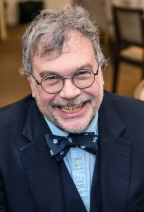 Peter Hotez, MD, PhD, DSc (hon), FAAP, FASTMH
Dean for the National School of Tropical Medicine, Baylor College of Medicine
Professor of Pediatrics and Molecular Virology & Microbiology, Baylor College of Medicine
Co-Director, Texas Children's Hospital Center for Vaccine Development
University Professor of Biology, Baylor University
Senior Fellow in Disease and Humanity, James A. Baker III Institute for Public Policy,
Rice University
Keynote: Vaccines and Immunizations in a Time of Global Boiling, Megacities and Anti-science
Pandemics and tropical infectious diseases are on the rise due to a confluence of climate change and urbanization, including areas of Texas and the Gulf Coast. Our Texas Children’s Hospital Center for Vaccine Development is developing new vaccines for the neglected and tropical diseases arising from these 21st Century forces including a new hookworm anemia showing high levels of protective immunity in a challenge infection model (CHIM) and a low-cost COVID-19 vaccine technology administered to more than 100 million people in low- and middle-income countries. But new vaccines alone won’t address the global declines in vaccine uptake arising from an antivaccine ecosystem that first accelerated in the U.S. more than 25 years ago and now globalizing. As both vaccine scientist and parent of adult daughter with autism and intellectual disabilities, Dr. Hotez has had a front row seat to the antivaccine movement and its evolution. An estimated 200,000 Americans died needlessly because they refused COVID immunizations in 2021-22 – they were victims of politically motivated antivaccine activism, now spilling over into childhood immunizations. Potential solutions are discussed.
Professor Peter Hotez, MD, PhD, DSc (hon), FAAP, FASTMH is Professor of Pediatrics and Molecular Virology and Microbiology at Baylor College of Medicine where he is also Co-Director of the Texas Children’s Hospital Center for Vaccine Development, and Dean of the National School of Tropical Medicine. He is also University Professor of Biology at Baylor University, Senior Fellow in Disease and Humanity at the James A Baker III Institute for Public Policy. Dr. Hotez is a vaccine scientist, biochemist, and pediatrician who has led or co-led the development of vaccines for parasitic infections-hookworm, schistosomiasis, Chagas disease-currently in clinical trials, and several coronavirus vaccines, including two low-cost COVID vaccines for global health so far administered to 100 million children and adults in India and Indonesia. He is also an ardent vaccine advocate and science explainer who combats antiscience and antisemitism in America, and globally.
Professor Hotez has authored 6 single-authored books with Johns Hopkins University Press, including Vaccines Did Not Cause Rachel’s Autism, Preventing the Next Pandemic, and The Deadly Rise of Anti-science ,and in 2025 will co-author Science Under Siege(Public Affairs)with the climate scientist, Michael Mann. Dr. Hotez obtained his B.A. (phi beta kappa) from Yale University, M.D. from Weill Cornell Medical College, and Ph.D. from Rockefeller University. He obtained his pediatric residency and fellowship training from Massachusetts General Hospital and Yale School of Medicine.
Professor Hotez is the author of more than 700 scientific papers, and he is an elected member of the National Academy of Medicine and American Academy of Arts and Sciences and has received numerous awards. They include the Scientific Freedom and Responsibility Award from AAAS, the Scientific Achievement Award from the AMA, the David E Rogers Award from the AAMC, the Science and Society Award from Sigma Xi, the Porter Prize in public health from the University of Pittsburgh, Winslow Medal from Yale School of Public Health, Mendel Medal in science and religion from Villanova University, Milton Popkin Award from the ADL Southwest, LBJ Moral Courage Award from the Holocaust Museum Houston, Walker Prize from the Boston Science Museum, and Smith Medal in Public Health from the NY Academy of Medicine. He was named TIME MagazineHealth100 in 2024 and one of 25 Global Leaders for U.S. News and World Report in 2025.
He has three honorary Doctor of Science degrees. Prof. Hotez served as US Science Envoy for the Middle East and North Africa in 2015-16, and he appears frequently on national media to explain biomedicine and pandemics.

Thomas Francis, Jr. — a man and a career, an influence and a personality. a human being and a person — still symbolizes all these for those who knew him as a man with a spirit that truly moved mountains.
His story in Ann Arbor began with the invitation from Henry F. Vaughan in 1941 to join the newly established School of Public Health at the University of Michigan and make it something different. This was the kind of challenge he loved and his first years must have been most exciting and rewarding, giving scope to his innate desire to build and to build strongly, an outstanding program of teaching and research.
His professional training and experience at Yale Medical School in the early 1920's had prepared him well for this enterprise. The circle of his intimate friends spread even larger as he moved to the Rockefeller Institute and New York University.
Once in Ann Arbor. he rapidly became a highly significant influence in the university community and ever more a national and international figure. Development of the university's virus laboratory was just the beginning: the department was soon concerned with all manner of infectious disease. In 1947. the Regents appointed him to one of the first Michigan distinguished professorships, naming him Henry Sewall University Professor of Epidemiology. His influence spread to the Medical School, and the Department of Pediatrics was fortunate to attract him to its faculty.
The Tecumseh Study was his creation and his vision of a comprehensive study of a whole city. The grand design incorporated the concept of a community laboratory which could take advantage of geography, history, and local culture to lay the basis for accumulated data from which it would be possible over a period of years to draw secure inferences on disease precursors.
Tecumseh and Dr. Francis' own contributions to the epidemiology of chronic disease and understanding of noninfectious factors were but further examples of his eminence as a true scientist, investigator, and innovator. All this is extensively documented. In recording only the Lasker Award and the Henry Russell Lectureship, injustice is done to dozens of other outstanding recognitions which tangibly testified to this eminence. Among three posthumous awards were a special plaque from the World Health Organization for distinguished contributions to the prevention and control of influenza, the Bristol Award for distinguished service from the Infectious Diseases Society of America, and the prestigious Jesse Stevenson Kovalenko Gold Medal for outstanding research in medical science from the National Academy of Sciences, of which he was a member for many years.