Building the future of maternal, child and adolescent health
Listen to "Building the Future of Maternal, Child and Adolescent Health" on Spreaker.
Subscribe and listen to Population Healthy on Spreaker, Apple Podcasts, Spotify, YouTube, or wherever you listen to podcasts!
Kendrin Sonneville introduces the new Center of Excellence for Maternal, Child, and Adolescent Health at the University of Michigan School of Public Health. She shares how the center works to prepare a skilled, equity-focused workforce that is ready to improve outcomes for mothers, children, adolescents, and families, and how building statewide community partnerships helps protect vulnerable people at vulnerable times.
In this episode
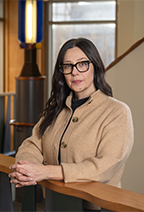 Kendrin Sonneville
Associate professor and associate chair of Nutritional Sciences
Director for the Center of Excellence for Maternal, Child, and Adolescent Health,
University of Michigan School of Public Health
Kendrin Sonneville is a registered dietitian, behavioral scientist and public health researcher whose research focuses on the prevention of eating disorders among children, adolescents and young adults. Sonneville uses a weight-inclusive framework to study how to promote health and well-being without inadvertently increasing body dissatisfaction, disordered eating and weight stigma.
Related Content
- The Center of Excellence for Maternal, Child, and Adolescent Health at the University of Michigan
- The Maternal Child Health Bureau
- Maternal and Child Health Certificate at Michigan Public Health
- Region 9 Perinatal Quality Collaborative
- 13 Centers of Excellence
Episode transcript
For accessibility and convenience, we've provided a full transcript of this episode. Whether you prefer reading or need support with audio content, the transcript allows you to easily follow along and revisit key points at your own pace.
0:00:02.0 Hello and welcome to Population Healthy, a podcast from the University of Michigan School of Public Health. Join us as we dig into important health topics, stuff that affects the health of all of us at a population level.
[music]
0:00:36.3 Imagine a career with purpose where every effort creates a ripple of positive change. That's the impact you can make with the University of Michigan School of Public Health's online MPH degree. In our fully online program, you can choose the courses that fit your unique goals, explore the public health issues you're most passionate about, and learn it all from some of the top faculty in the field. Unlock your potential to transform lives. Your journey to a career with purpose begins at publichealth.umich.edu/online-mph.
[music]
0:01:28.0 Welcome to Population Healthy from the University of Michigan School of Public Health. I'm your host for this episode, Dr. Kendrin Sonneville, Associate Professor in the Department of Nutritional Sciences and Director for Michigan Public Health's new Center of Excellence for Maternal, Child, and Adolescent Health. Today I'll speak about why the center matters, what we hope to achieve, and how we can work together to improve the health and well-being of mothers, children and families in Michigan and beyond.
[music]
0:02:09.4 To begin, I'd like to share a bit about what drew me personally and professionally to maternal child health and how it has shaped my vision for this work. As a college student studying nutrition, I worked part-time as a high school coach in Lansing. I was immediately drawn to working with adolescents and I was struck by how they wanted to connect with adults that would listen, would take them seriously, and those that would show up for them consistently. Many of the students I worked with were navigating challenges far beyond their years, peer pressure, stress, uncertainty. But they were also really thoughtful and resilient and perceptive, and that experience stayed with me.
0:02:44.9 At the time, I didn't have the language of life course framework or systems-level intervention. I just saw how experiences in adolescence could shape confidence, opportunity and long-term health. And I hadn't realized my academic interest in nutrition and my connection with teens could come together as a career. That connection began to take shape in graduate school when I saw a posting for a nutrition fellowship, Leadership Education in Adolescent Health, or LEAH, funded by the Maternal and Child Health Bureau. I pursued it and through LEAH I was formally introduced to maternal and child health as a field. I went on to complete doctoral training with support from an MCH Center of Excellence at Harvard, and that experience shaped how I think about training and systems-level change and responsibility to prepare future leaders thoughtfully.
0:03:30.4 What started as a part-time job with high school students eventually became a career rooted in maternal child health and a commitment to building the same kind of supportive training environment that shaped me. This center reflects that journey. At its core, the Center of Excellence for Maternal, Child, and Adolescent Health exists to prepare a skilled, equity-focused workforce ready to improve outcomes for mothers, children, adolescents and families. Using a life course framework, we combine training, mentorship and hands-on experiences so students understand not only who they serve, but when interventions can have the greatest impact. This approach builds on the University of Michigan's longstanding tradition and strengths in elevating maternal and child health while also creating new infrastructure for interdisciplinary training and statewide community partnerships. Students develop skills that enable them to make a real impact as they enter the public workforce, whether improving access to care for babies in rural communities, supporting mothers during the vulnerable postpartum period, or promoting healthy development for children in under-resourced neighborhoods.
[music]
0:04:38.7 So when I think about maternal child health, I think about my own training, and the training is really all about life course. And I know that's like a really academic word, but it is a reminder that there are just moments in people's lives that shape them in ways that are permanent. And maternal child health tends to focus on windows like pregnancy, childbirth, like early infancy, adolescent window, and that is what our center is going to focus on. But it is really these times that we can really invest a lot of effort or put a lot of attention to make a long-lasting impact. Like these are moments that you can't recreate, these sort of developmental times that are singular. And it makes a lot of sense that if we're going to invest energy in public health interventions, that we focus on these times of great impact.
0:05:25.2 People might be surprised that we have adolescent health in the title of our center, and that was a decision that I made because I consider myself an adolescent health researcher. And as I mentioned, I started my career in a training program that was focused on adolescent health that was funded by the Maternal Child Health Bureau. It is an organization that tends to focus on these windows of development that are more sort of classically considered critical windows, like childbirth and infancy, but that organization recognizes that there's so much that happens in the adolescent window that they should invest energy in training people to understand that window. Adolescents are not big children, they're not small adults. There are so much sort of unique happening in terms of kind of building autonomy and sort of setting the stage for adult health that it requires specific attention. And to some extent, that leads into how people are as parents, it leads into how people... How prepared they are to become mothers. And so certainly the MCH cycle isn't just linear, right? What we do earlier in our life also sort of affects our families and some of these other health decisions for generations to come. But I think it's really a unique feature of our center is that we have so much adolescent health expertise here at the School of Public Health that we can really highlight this really important critical window for physical health and mental health, that we have more opportunities for training our students that are interested in that window.
[music]
0:06:54.1 I want to share why now is such a critical moment in the field of maternal and child health both nationally and right here in Michigan. In today's climate, women's health and the professionals who serve mothers, children and families face a rapidly changing landscape. Funding is uncertain, policy priorities shift, communities are dealing with growing inequities, and students often encounter the same pressure as the populations they aim to serve. That's why workforce development is central to the Center's mission. Structured training, mentorship, and real-world experiences equip students with the skills, perspective and confidence to respond effectively to complex challenges. One of our first initiatives was launching a foundational maternal and child health course, which is the core of our certificate program. It's taught by Karen Peterson, who was on faculty at the Harvard MCH Center of Excellence when I was a student, which makes this all feel especially full circle.
0:07:49.2 The course embodies what the center stands for, rigorous, equity-focused and grounded in real-world practice. Each week, experts join to connect theory with lived experience. For example, during a session on maternal and child health, students heard from Dr. Lisa Kane Lowe, a national leader in evidence-based maternity care, and Avonlea Rickerson, a community engagement specialist advancing equitable maternal health across Southeast Michigan and also a graduate of our MPH program. They highlighted the work of the Region 9 Perinatal Quality Collaborative, which addresses maternal and infant morbidity and mortality throughout community engaged equity-focused programming, trauma-informed care, and mom-centered home visiting models. This session exemplified the bridge between research and real-world impact, helping students see how policy practice and community engagement intersect. I had the luxury of participating in the first two sessions and honestly the energy in the room was really incredible and really gratifying. The students kept saying things like this is what they've been missing. They receive a really strong training in health equity at our School of Public Health, but they were saying that they were really craving the basics... Why these life stages really matter and how maternal and child health systems actually work and how policies in this country have shaped the health of women and children. Hearing that excitement and that sort of desire for this foundational knowledge was really powerful, especially because Dr. Peterson and I really dreamed of bringing an opportunity like this here in Michigan. And it's really wonderful to see that this vision is now a reality.
[music]
0:09:30.3 We talk a lot about the focus on vulnerable time periods in the field of maternal and child health, but we also have to think about who is most vulnerable during these times. So good healthcare for women and mothers and children is expensive. It requires access, it requires insurance, it requires sort of knowledge of available resources. And so there are so many women who are vulnerable to not getting the services they need, whether it's reproductive healthcare at any stage of their life, whether it is knowing about support services to support pregnancy, making sure that people's wishes are honored during childbirth, knowing how to navigate the really, really challenging early days of a kid's life and what they need, and how to support maternal mental health during that time and to support infant feeding during this really challenging and critical window.
0:10:22.1 In the postpartum period, something that mothers often really need is support related to breastfeeding. And this is an area of high interest of our center is trying to identify opportunities for integrating lactation support training within our MPH program. I have a faculty colleague, Dr. Liv Anderson, in Nutritional Sciences, who has developed a training for public health practitioners. And we are actively looking for more opportunities to provide exposure and training opportunities in a lactation support space for our MPH graduates. There are so many times where we are vulnerable and the most vulnerable among us are lacking services. And I think a lot about the policy landscape that should be there to provide safety nets for the most vulnerable. And we're seeing some of those safety nets stripped away. There are, I mean, probably more policies than I can think of, how our policy landscapes really dictates the health of mothers, children, family. I think we think classically of programs that support women during pregnancy and children sort of in early life. Like WIC is an example of the program, Women, Infants, and Children. It provides nutrition benefits, nutrition education, food for women who are breastfeeding and their children, or formula for women who are not breastfeeding and are able to provide the formula for their kids.
0:11:49.0 And so we are providing food through our policies and the policies that we have dictate who qualifies, what they need to do to prove their eligibility and how long they can stay on such a program. Because I'm a dietitian by training, I think about food a lot, but I think about food policy past the early infant window. We're also considering other food benefits like the SNAP program, the reduced-price and free school lunch program. So much of the way that our kids are fed in this country come through policies that are built on decisions of how much can we pay to feed our nation's kids and who gets to benefit from those policies. As an adolescent health person, I'm always gonna go back to an adolescent health example. But one policy I've been really active in in the state of Michigan relates to the availability of diet pills and weight loss supplements over the counter. There's no laws banning minors' access to these products that are unregulated, untested, and these are products that are used and abused by adolescents in a key developmental window, and particularly for folks who have eating disorders or are at risk for eating disorders.
0:12:57.6 And I have been lucky to work with Representative Byrnes in the state of Michigan. She represents the Dearborn area who recently introduced legislation that would restrict access to these products to individuals under the age of 18 in the state of Michigan. And so that's another example at the state level of Michigan, really innovating and pushing legislation to help protect our adolescents. There's one other state in the country right now, New York, that bans the sale of these products. And many other states have tried, but thus far have not been successful. And so that's like a concrete example of ways that public health interventions can't always protect adolescents from some of these predatory industries like the diet pill industry. And in that space, policy is going to be much more effective if we can get it passed. These are just some among many of the challenges we're hoping to think through and address and to talk to the people of Michigan and Michigan counties to really work together to find solutions and to help protect vulnerable people during vulnerable times.
[music]
0:14:04.2 The 13 Centers of Excellence in maternal child health across the country, we meet regularly, we have quarterly calls, we have an annual in-person meeting. And these are opportunities to share what we're doing, best practices, what is sort of working well in terms of community practice partnerships, we can innovate student training, how we are sort of funding our students and really setting up the next generation of the MCH workforce to lead. And so it's an incredible opportunity to hear what people are focusing on, because every center thinks about different MCH challenges in their area. And it's really inspiring to hear what these centers are taking on, how they're going about it, what partnerships they've been able to utilize. We are the only brand new center. All other centers have been... You know, have had some sort of MCH funding before, so we really have a lot of latitude to decide who we want to be as a center and get to see these other sort of more established places share what they've been able to accomplish and how has really been sort of inspiring to me to think about what we can be. It allows me to think about where we're heading and how we can continue to build opportunities for our students and to build the partnerships within the State of Michigan that we're starting to build, but that we're hoping to continue to expand.
[music]
0:15:23.4 Because Michigan Public Health is investing in education, mentorship and real-world experiences, we're building a workforce ready to meet today's challenges and shape a healthier future for families, communities, and generations to come. If you're someone who cares about mothers, children and young people and their access to quality healthcare, you can help too. By educating yourself on some of these issues I mentioned and understanding policy on health access in your area, you're advancing this work. For more information about our Center of Excellence and how to get involved, visit the University of Michigan School of Public Health website. Together we can create a brighter, healthier future for all families.
[music]
0:16:09.4 Thanks for listening to this episode of Population Healthy from the University of Michigan School of Public Health. Visit our website population-healthy.com for more resources on the topics discussed in this episode and to find more episodes. Population Healthy is produced by Crissy Zamarron with support from Destiny Cook and Anne Reilly. If you enjoyed the show, remember to subscribe, rate and review wherever you listen to podcasts and consider sharing this episode with friends.
[music]