Vaccine conversations: Tools for building trust

Listen to "Vaccine conversations: Tools for building trust" on Spreaker.
Subscribe and listen to Population Healthy on Spreaker, Apple Podcasts, Spotify, YouTube, or wherever you listen to podcasts!
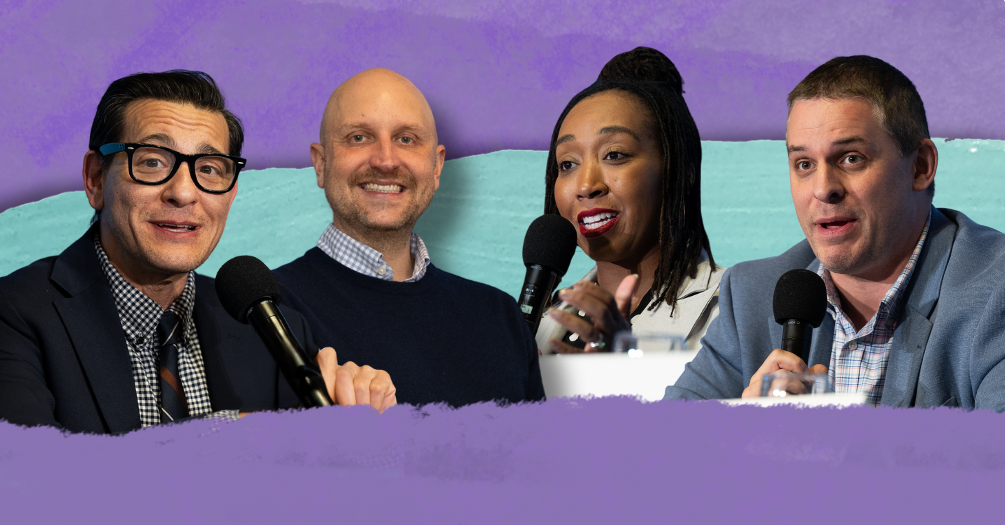
Vaccine conversations don't have to be difficult. Whether you're answering questions from relatives, supporting hesitant friends, or simply want to better understand where we are today, this panel discussion helps you navigate the current vaccine landscape and have more productive conversations about vaccines.
Recorded in front of a live audience at the School of Public Health, our expert panelists share insights on building trust and understanding when discussing vaccines with family, friends, and community members.
In this episode

NATASHA BAGDASARIAN, MD, MPH
Chief Medical Executive, State of Michigan
Dr. Natasha Bagdasarian has been the Chief Medical Executive for the State of Michigan since 2021. In this role she provides overall medical guidance for the State of Michigan as a cabinet member of the Governor. She is board certified by the American Board of Internal Medicine in Internal Medicine and Infectious Diseases and is a Fellow of the Infectious Diseases Society of America. Bagdasarian also serves as an adjunct professor in the Department of Epidemiology.
 VERONICA VALENTINE MCNALLY, JD
Founder, Franny Strong Foundation and I Vaccinate Campaign
Veronica Valentine McNally is the Director of Trial Advocacy & Director of Externships at Michigan State University, playing a pivotal role in shaping the next generation of legal professionals. She is the founder of the Franny Strong Foundation and I Vaccinate Campaign, providing tools that help Michigan parents protect their kids.

ANAND PAREKH, MD, MPH, FACP
Chief Health Policy Officer, Michigan Public Health
Dr. Anand K. Parekh is the Chief Health Policy Officer at the University of Michigan School of Public Health and Senior Advisor at the Institute for Healthcare Policy and Innovation. In this capacity, he helps translate the care, practice, and research occurring at the university to policymakers to drive health impact. Parekh also serves as an adjunct professor in the Department of Health Management & Policy.
Resources
- Michigan Health Communications Initiative
- I Vaccinate Campaign
- Pew Research Center Poll on Childhood Vaccines
Episode transcript
For accessibility and convenience, we've provided a full transcript of this episode. Whether you prefer reading or need support with audio content, the transcript allows you to easily follow along and revisit key points at your own pace.
0:00:01.6 Crissy Zamarron (ad voiceover): Imagine a career with purpose, where every effort creates a ripple of positive change. That's the impact you can make with the University of Michigan School of Public Health's online MPH degree. In our fully online program, you can choose the courses that fit your unique goals. Explore the public health issues you're most passionate about, and learn it all from some of the top faculty in the field. Unlock your potential to transform lives. Your journey to a career with purpose begins at publichealth.umich.edu/online-mph.
0:00:50.9 Michael Kasiborski (host): Welcome to Population Healthy, a podcast from the University of Michigan School of Public Health. Today we're bringing you a timely conversation from our recent community event, Vaccine Conversations: Tools for Building Trust. The discussion brought together three leaders in public health communication and vaccine confidence. Natasha Bagdasarian, Veronica Valentine McNally, and Anand Parekh. They'll introduce themselves in just a moment. The event was designed around a simple but powerful idea that everyday conversations can help build healthier, more connected communities. Whether you're navigating questions from loved ones, supporting someone who's hesitant, or simply trying to stay informed, the insights shared here offer practical ways to communicate with empathy, clarity and confidence. Now let's dive into the discussion.
0:01:46.0 Anand Parekh: So good to be with all of you today. Thank you for coming this morning. This is such an important issue. Trust is one of these things that's built one community at a time with family and friends. And that's really what we're going to be talking about today, tools through which we can build trust. So I'm Dr. Anand Parekh. I'm the Chief Health Policy Officer here at the school. I try to help the school translate the care, practice and research happening to policymakers and the public to drive positive health impact. And I'm joined by two incredible, incredible speakers. I'm going to moderate the discussion, but really, really pleased as to have Dr. Natasha Bagdasarian with us today, the Chief Medical Executive for the State of Michigan and to have Veronica Valentine McNally here, who is a director of Trial Advocacy and the director of Externships at the MSU College of Law. The format's going to be quite simple. I'm going to ask a couple of initial questions just to set the stage in terms of where we are with respiratory viral season and vaccinations. And then we're going to get into specific questions about building trust in communications. And these are questions that came largely from all of you. So ahead of time we were able to ask you and solicit questions and you guys provided a lot of questions. And again, I think this is also a very timely topic for better or for worse. So thank you for all of your questions and if they don't get addressed during the hour that we have, I'm sure our speakers will be around right after and you can get your questions answered. So with that, maybe Dr. Bagdasarian, Natasha and Veronica, if you want to provide some just opening remarks and maybe a little bit of background.
0:03:27.9 Natasha Bagdasarian: Good morning everyone and thank you for having me here today. I'm excited to be here talking about this very timely topic. As you all have been seeing in the national news, vaccines and public health are under attack. We've never quite seen a year like 2025. We have seen changes at the federal level from the disbanding of the ACIP to changes in CDC language and guidance without a scientific review that we've never seen before. And this is coming on the heels of a landscape where there was already a lot of distrust. There was already distrust in governmental agencies, in public health, in health care, and in anyone with an official title. So these two things coming on the heels of one another is leading to a vaccine landscape that frankly is frightening. We're seeing a resurgence of diseases like measles and pertussis all across the United States, including here in Michigan. We're seeing an increase in unscientific rhetoric and negative language about not just vaccines, but science across the board. And we're seeing a decline in our vaccination rates. So we've been seeing this decline in not only vaccination rates for things like COVID and influenza since the beginning of the pandemic, but we're seeing a decline in childhood immunizations.
0:05:05.0 Natasha Bagdasarian: We're seeing that for babies under 35 months. We're seeing that for kindergarteners, for middle schoolers across the board. And I think we have to be prepared for what is next. I think we have to be prepared for, again, more of these vaccine preventable diseases coming back, as a result, potentially more hospitalizations, more illnesses, and even perhaps more deaths. This year in the United States it is the worst year we've had for measles since the 1990s. And that is in terms of both cases. We're at over 1,700 cases of measles. And deaths – we've had three deaths from measles this year alone. So we have to be prepared for what's coming next. And I think this is really a time where we need to work on rebuilding some of that trust and thinking about new ways of building trust, especially in light of what is happening with the CDC and I'm sure we'll be talking more about some of these topics, but I'm excited to do a deeper dive and dig into some of these topics with you all.
0:06:12.6 Veronica Valentine McNally: Good morning. It's a pleasure to be here with all of you. I think it's important for me to share with you why I do the work that I do. It is because in 2012 I lost my infant daughter, Francesca Marie, to pertussis or whooping cough. And when she passed away, we formed a foundation, the Franny Strong Foundation, to really start to promote pertussis awareness. And it was within a very short period of time that we realized we needed to be talking about all vaccine preventable diseases. And so I founded the I Vaccinate Campaign, which is a public awareness campaign to educate about the benefits of childhood vaccination. That campaign launched in 2017. It is a public private partnership with the state of Michigan, the Michigan Department of Health and Human Services, and it has been immensely successful in getting parents credible scientific information. So I am really looking forward to today's discussion and absolutely would be happy to stay after to answer any questions.
0:07:09.7 Anand Parekh: Thank you, Veronica, for sharing that and Natasha, for those opening remarks. So I want to start and Natasha, I think this is where you were starting as well. So twin challenges and you were alluding to right now we're entering respiratory viral season. Traditionally, unfortunately, tens of thousands of Americans die from COVID, RSV. COVID's not necessarily seasonal, but RSV, flu. Talk a little bit about the vaccines, their safety, their effectiveness, and then you can get into childhood vaccinations and sort of the scourge of vaccine preventable illness there.
0:07:46.4 Natasha Bagdasarian: Really great question, Anand. I think when we're talking about COVID and flu vaccines, part of the issue has been we have not been talking about these vaccines and what they can do in a nuanced way for the last several years. I think there was a lot of hope around the COVID-19 vaccine when it first came out and so people had a belief early on that this was going to stop COVID, that this was going to absolutely halt transmission and nobody would get COVID who was vaccinated. And now that we have a few years of experience, and we have many, many years of experience with flu vaccine, we know that that's not really what these vaccines do. They don't stop infections necessarily, but what they do is they reduce severe complications, they keep people out of the ICU, they keep people off ventilators, they prevent deaths, they prevent hospitalizations, urgent care visits. And I think that some of our language around COVID and flu vaccines has not kept up with our knowledge and understanding. And we have to make sure when we're talking to the public that we're talking to them about what the actual benefits are. That this may not prevent your flu infection, but it can certainly keep you out of the hospital. And I think that nuance needs to be brought back into our conversations about flu and COVID vaccines in particular. Whereas when we're talking about childhood vaccines, some of them are much more effective at completely halting transmission. So when we're talking about the measles vaccine, it's a very different way that we're communicating. We know that if you get two doses of MMR, you have a 97% chance of being completely protected against any form of infection. So I do think that our knowledge and understanding of the COVID vaccine has evolved, but the communication now needs to sort of keep up in terms of how we're talking to the public about those things.
0:09:45.8 Anand Parekh: Thank you. And Veronica, building off of that, oftentimes the public health care professionals, they look to the federal government for some of that clarifications, that nuanced language. We are not getting that. And based on your experience and you served on, talk a little bit about the Advisory Committee on Immunization Practices, this advisory committee to CDC. We know FDA is the entity that ensures that vaccines are safe and effective. CDC makes recommendations to states and healthcare providers, Vaccines for Children Program, many entities. And then there's this advisory committee. Talk a little bit about perhaps the confusion or the lack of sort of nuance that Natasha mentioned that we're not hearing what we need to hear from a scientific perspective.
0:10:33.9 Veronica Valentine McNally: Yeah, it's true. And it's applying to both health care providers and the public. So we are receiving conflicting messages, mixed signals. And I think that at the root cause of this particular confusion is really a gap in understanding among some federal officials regarding not only the need for vaccines, but also how vaccine recommendation processes works. So I served on the Advisory Committee on Immunization Practices from 2018 to 2023 as the consumer representative. At that time, the ACIP was comprised of 15 individuals including the consumer representative. It is now 19 members that are permissible under the charter. So I want to talk to you a little bit about that ACIP process. The ACIP is widely regarded as one of the most well respected public health bodies in the world. Other countries look to the ACIP for understanding about how we make recommendations. What I think a lot of people don't know about the ACIP is the work that is done primarily with the ACIP begins in subcommittees or what they call work groups. Those work groups are doing an in depth review of topics and those topics that they're looking at, that in depth review, that pre-work, if you will, allows for efficient and informed decision making.
0:12:02.9 Veronica Valentine McNally: So keep in mind that the ACIP has been in existence for over 60 years, over 60 years. And just so you have an understanding of what a work group might look like, the ACIP Workgroup on COVID Vaccines in April of 2020 had 40 members with expertise in epidemiology, vaccine safety, vaccinology, infectious diseases, immunology, general medicine, geriatrics, pediatrics, obstetrics, immunocompromised hosts, vaccine administration and delivery, public health surveillance, ethics, health equity, communications and emergency response. This group had in it some of the best medical minds in the country, if not the world. So this is the kind of work that goes into that work group setting and I don't think that there's enough understanding about that. So what we're seeing at this level is a departure, so the ACIP's departure from evidence based consensus. And I think that's a problem and I hope that we can get back to that. And I think that is really what is causing some confusion and mixed messages.
0:13:20.4 Anand Parekh: So a specific example in the last 48 hours, and this is sort of the national news I think many of us have been dealing with. On the CDC website, focusing on vaccine safety, autism and vaccines, there is a new statement that says, “The claim ‘vaccines do not cause autism' is not an evidence-based claim because studies have not ruled out the possibility that infant vaccines cause autism.” Of course, as a claim that comes from no new evidence, the evidence has for decades been well established. This change happened unbeknownst to CDC career staff and scientists. ACIP was not involved but perhaps with this new constituted ACIP, it's unclear what they would have said. But both Natasha and Veronica, your initial reactions, we're talking about building trust here. And then I know there's also some response that you all within the last 24 hours within your portfolios have had. But Natasha, if you want to start.
0:14:25.7 Natasha Bagdasarian: I think this is the type of mixed messages that Veronica was alluding to. This is the type of messaging that is eroding trust in public health. The CDC had been the voice, not only nationally, but when I have worked internationally, other countries look to the CDC to base their guidance on. And the CDC had been the trusted voice in public health. And when we're seeing claims like this from the CDC, even though now we have had hundreds of other public health agencies at the state level, medical organizations weighing in and saying no, there is not a causative association between vaccines and autism, people are still left with a grain of doubt. And I think this type of disinformation and this type of deliberate attempts at creating chaos and confusion, it's going to have implications, it's going to have ramifications on our vaccine uptake. I think that once something like this has been said by an agency like the CDC, there is no amount of additional commentary from other groups. There's no amount of additional evidence that can undo the damage that has been done. So again, how do we operate in this new landscape without a CDC that we can look to as our source of truth, as our true north? And I think this is very challenging.
0:15:54.4 Anand Parekh: I'm not sure how much of the audience knows about the Michigan Health Communications Initiative, but it was very nice to see very quickly yesterday sort of references to what had happened and then sort of evidence based factual statements. But if you want to describe that quick response that we have in the state from a health communications perspective.
0:16:12.8 Natasha Bagdasarian: I was so hoping you would ask about this. I feel a little hampered because I don't have my QR code with me. I usually have a QR code anytime I'm giving a talk about any topic. And I force my audience to sign up for the Michigan Health Communications Initiative. But I'm sure we can share those details with you. It's essentially an agency that is operating outside of state government, but with governmental support. So this is an organization that we have created in conjunction with a national nonprofit. They conduct media monitoring for us on public health topics around the state. So they look at stories and news issues that are trending nationally and in Michigan. And they're looking specifically for disinformation that's out there. And then they are creating in real time good information to counter that disinformation. So for anyone who's interested, you can sign up for the newsletter. You can get a once monthly report on what is the disinformation that's spreading, what are the pieces that need to be addressed. And then we've also found that sometimes people don't want to get their public health information from state government. They don't want to get their public health information from any sort of large governmental entity.
0:17:32.0 Natasha Bagdasarian: They want to get their public health information from someone that they know and trust, someone locally. And so we now have physicians and local health departments and community based organizations and libraries and bookstores putting out good public health information that people can trust. And so very quickly, when this webpage was changed to reflect new language about vaccines and autism, we very quickly made sure that there was new information being put up on the Michigan Health Communications Initiative so that not only can the Department of Health put out correct information, but also all of these community organizations can talk to their community members directly and give them scientifically accurate information about this topic.
0:18:21.5 Anand Parekh: Thank you. Veronica.
0:18:23.5 Veronica Valentine McNally: We are really lucky to have a number of great communication techniques in the state of Michigan that we know work well. So I want to tell you a bit about the I Vaccinate Campaign and some of the messaging that is resonating at a time when I think we need to do more of this advocacy work. Back in 2014, we started our focus group test for the messages that we would ultimately use in the I Vaccinate Campaign. At that time, we asked moms in these focus groups to tell us what “I vaccinate” statement resonated the most with them. The number one statement that resonated the most with these moms, which resonates today too, is, “I vaccinate because I am responsible for the health of my child.” Among the bottom two were, “I vaccinate because I believe in science” and “I vaccinate because I want to see my child graduate from high school.” So that is really, I think, surprising to learn that. We know that we need to empower parents. We know that we need to make sure that they have good information. When we just recently did another round of focus groups, I think what we saw was pretty remarkable as it relates to our post COVID environment.
0:19:39.7 Veronica Valentine McNally: And that is that there is a lot of mistrust. There is this perceived lack of trust in specifically safety and the speed with which vaccine, this particular vaccine, COVID vaccine, came to market. So what does that mean for us? That means that that trickles into other respiratory viruses and we need to make sure that we are diligent about talking about the flu vaccine, why we need the flu vaccine on an annual basis. And we saw that it was remarkable that moms did not realize the number of diseases that our vaccine series protects against. So when we talk about vaccines now, we need to be talking about that they protect against 16 diseases by age 18. So a lot of messages that we know will work, but we have to make sure we have the people out there, our ambassadors, spreading these important messages.
0:20:33.1 Anand Parekh: Particularly last point. We jumped to vaccines in this conversation without talking enough about the viruses themselves, because many of us have not seen them in parents as well and the morbidity, mortality that these viruses caused prior to having vaccines. So thank you for that. I want to get at this issue of the lack of trust and why. So Pew Research Center released a new poll earlier this week and they found that nearly two thirds of the public have high confidence in vaccine effectiveness, this is on childhood vaccines. And about half trust their safety, testing and schedule. I'm sort of a glass half full kind of person, but I was kind of alarmed at these numbers and then even more concerned when they stratified by party affiliation, education status, looked at racial and ethnic minorities and for most concerning, they looked at parents with children under the age of 18 and these numbers were even less. These numbers weren't always like this. In fact, probably pre COVID they were significantly higher across the board. And so talk a little bit more if both of you could, on sources of how we got to where we are today and what has changed. And we've alluded to COVID, political figures, we live in the social media age, but how did we get here so fast for something that was not controversial to the vast majority of the public? Let's put it that way.
0:22:09.7 Natasha Bagdasarian: I ask myself that question a lot, how did we get here? Because I think when I was doing my infectious disease training, there were anti vaccination groups, but they seemed very sort of fringe. It was not a mainstream thing. And so in 2025, I do wonder what happened in the last 15 years that made being anti vaccination or fearful of vaccines such a mainstream attitude. And I think that it's a variety of factors. You alluded to them. I think that the COVID pandemic raised this, brought this to attention. I think the political divisions that we're seeing in our country and the fact that vaccines somehow became a political issue when they are not, I think that was one of the things. But I also think social media has played a large role here. And one of the things that I have found is that people really, the general public, a lot of folks say that they want data, but actually what they are looking for is stories. And they find stories much more impactful than 1,000 people were studied and this is what the data showed. So they really want to hear stories. And I think social media has amplified a lot of scary stories.
0:23:35.4 Natasha Bagdasarian: And if one person has an adverse event from a vaccine or thinks they did, even if the things are not related, a scary story can be amplified and spread a million times. So it's this sort of fear based storytelling and the power of people that you know. So I mentioned earlier that I think a lot of folks don't want to get their guidance and recommendations from big government. They're much more interested in sort of personal connection and hearing, again, stories from people in their circle. And so if the stories in your circle are scary and make you fearful of vaccines, that is what's going to stay with you. And I think that's why it's so important. Veronica mentioned ambassadors, and I talked about the Michigan Health Communications Initiative, where we're counting on local organizations and individuals to share information. I think that's why it's so important for us, those of us who are involved in public health and science and vaccines, to, number one, start telling stories. I think stories are really impactful. And number two, I think we need to start enhancing and nurturing those personal connections and making sure that we've got ambassadors who are within communities, who are speaking directly to people that they know, to people who trust them. But how we got here is something I think about every day.
0:25:02.7 Anand Parekh: Thank you. Veronica.
0:25:04.0 Veronica Valentine McNally: I agree. I think social media has really played a very big part of where we are today. And you know that parents who are looking for information about vaccines are doing research online and while providers are by far the greatest source of information for parents I think they're starting their work there. So I want to just give you something to think about. We had the acting director of the CDC come out a few weeks ago and say that the MMR vaccine should be split into three shots. And so you have parents who are seeing this, who now are bringing just this question of what does this mean? What do I do with this information to providers? What we know about providers from not only research but also the focus group work that we did is that personal relationship matters and personal opinion matters. So it is absolutely important that the provider make a very strong recommendation and that they share their own personal reasons about why they vaccinate with their patients.
0:26:10.3 Natasha Bagdasarian: Veronica, may I add on to that a little bit? I think you're 100% correct. When I'm talking to my patients, I try to say, this is not something I'm just recommending to you, but I make sure my child got these vaccines or I make sure my mom had these vaccines. So I think that's 100% spot on. But the other thing I'll point out is that a lot of healthcare providers are not as involved in some of the nuance and what's happening in this landscape space because they're busy, they have lives. They might be focusing on other aspects of internal medicine or pediatrics. And so when there are comments like the MMR should be split into three different vaccines, if someone then goes to their pediatrician, a lot of times the pediatrician doesn't really know how to answer that question because it's something that's never come up before because we don't currently...
0:27:11.1 Anand Parekh: And manufacturers don't even produce them.
0:27:12.7 Natasha Bagdasarian: We don't even have those three vaccines. It's not even a thing. So another thing that we really need to do is bring health care providers into the fold and make sure that there is better connection between public health and health care.
0:27:26.8 Anand Parekh: And when we talk about best practices for communication strategies, can you talk a little bit more about the differences between when we communicate to the public at large versus individuals in a clinical setting or what you hear in your focus groups? Are there certain strategies that work better on Michigan Health Communications Initiative or I Vaccinate websites and sort of that go to the broader public versus ones that work better in the clinical examination room or in your focus groups?
0:27:58.3 Natasha Bagdasarian: I think that any sort of communication works best when it's really tailored, when it's really nuanced. And so if you're speaking to an individual, making sure that you are providing information at that person's level of understanding in an appropriate language, in an appropriate cultural way, all of those things are really important. And so when you're having a direct one on one conversation, it's easier to make sure you're giving really tailored, targeted information. But I do think that there are ways that you can take broad information to the general public and still make it feel really personal, again by sharing stories, by talking to people like they are humans and not robots, by giving people information rather than saying, “vaccines are safe and effective.” I think we're past that. We're past those trite lines of vaccines are safe and effective. People want actual information. People want to know, did you know that last year urgent care visits were reduced 36% in people who were up to date with their COVID vaccine? People want actual data or stories. They want something. So I think we've also got to respect that people are looking for information and that everyone wants to do the right thing for their kids. Everyone wants to do the right thing for their families. Nobody is saying no to be difficult. Nobody's saying no because they want to just be a contrarian. They're saying no because they really have doubts. And we've got to address those doubts.
0:29:26.5 Veronica Valentine McNally: Yeah, I think for providers it's important that we give them information at their fingertips that they can share with their patients. I do think it's important that providers pinpoint the specific questions that patients have and address those questions with science and also the personal stories. So I agree with all that. I think we also need to be giving patients a takeaway and that takeaway is one that's going to encourage the conversation about vaccination. We know that a third of patients who initially refuse a vaccine will ultimately change their mind after education efforts. That's pretty remarkable. So it's important to continue the conversation. As far as parents, it is important that we meet parents where they are with their level of information that they have. It is important that we meet them with empathy. They are absolutely trying to protect their children and we need to acknowledge that they have questions about vaccines and that that makes them a good parent to have questions to protect their children. So I think both that empathy factor and then also making sure that they hear from other moms who are saying, I vaccinate, other dads, I vaccinate. That peer to peer education component is so effective.
0:30:43.8 Anand Parekh: Both of you just answered the next question without even knowing, which is what are strategies for finding common ground with those with different perspectives? And if I'm hearing you and please elaborate, it's both evidence and empathy. I mean, you have to understand where people are, meet them where they are, but you have to give them evidence when we have evidence and be very clear about that. But anything more to sort of elaborate on this idea of finding common ground with those with different perspectives?
0:31:12.6 Veronica Valentine McNally: I think going into the conversation with an open mind and please let me acknowledge that I know that these are very difficult things to do in a clinical setting. You don't have a ton of time to counsel patients. You don't have a lot of resources necessarily in the moment to be able to answer those specific questions. But it's a tell me more kind of conversation. It's a, oh, I understand. Let me tell you why you shouldn't be as worried about this. Let me tell you what the vaccine effectiveness rate looks like. Let me tell you what we know to be common side effects and absolutely rare adverse events. So I think making sure that you all understand what the parent is really talking about. I've had a number of conversations with parents where they don't have any issues or questions about anything other than the influenza vaccine. And so it's important to just make sure that those discussions are focused on just that particular vaccine and helping move the needle with respect to that particular piece.
0:32:17.5 Natasha Bagdasarian: I think just as you said, Veronica. And again, Anand, I think the storytelling and the data need to sort of come together. Veronica and I both have personal stories with vaccine preventable illnesses that we have shared. I just wrote an op-ed in the Detroit News sharing my story about influenza while pregnant and losing my pregnancy. And I think as painful as these stories are, sharing them can raise awareness and can show that we are human and that we understand the doubts, but also we want people to sort of learn from our pain and loss. And so I think that was really nicely put, Anand, that it's a combination of empathy and providing some information.
0:33:08.9 Anand Parekh: Thank you both for sharing those experiences and it's tragic and still so important for people to hear. I want to talk about sort of the importance of partnerships and alliances because who is it that people trust? Their family, their friends? Certainly public health professionals or their own clinician, but there are others who people trust. So the question from the audience is how can public health professionals partner with community leaders to create sustained conversations about vaccines rather than one time outreach efforts? Who else in our community do we need to ensure that they are empowered with the information? Community based organizations, faith based groups, business leaders. Who else do we need to ensure that they understand this because they are trusted agents in their communities?
0:34:02.0 Veronica Valentine McNally: Well, if we look at certain areas in Michigan where we have some low vaccination rates, we see, for example, in rural communities. And so having partners in those rural communities to be able to not only educate, but then also give access to people to get vaccines is really important. So what do some of those partnerships look like? It is probably in some circumstances it's people who are in the religious organizations, it's people who are talking to people at various places where their kids are going to be on a daily basis. So I think we have to think about it by individuals and by sectors where we're seeing some gaps in vaccination and then really find those strong partnerships there. I was in a hair salon a number of years ago during COVID actually with my kids, where I saw, it was an I Vaccinate pamphlet that was kind of... It was affixed to the wall, and I was so happy to see it there because that I think is a place where people are, they sit down, they are kind of looking around, it catches their eye and at least it gets them thinking about it. So sometimes it's just indirect things, indirect actions that can work with our partnerships too.
0:35:25.4 Natasha Bagdasarian: Yeah, well said, Veronica. I think that one of the things that you're alluding to, and I think it really holds true is that trusted messengers are different in every community. There is no one size fits all. A couple of examples about that. In Detroit, we had a lot of luck early on or a lot of great success early on in COVID, working with faith based communities and doing vaccination events at churches because those were some of the most trusted messengers in those communities. We made vaccines available right there. And their religious leaders were saying, yes, please come and get vaccinated here. Recently we've been following what's happening with measles. The measles outbreak in Texas, which has now spilled over into New Mexico and Arizona. And those outbreaks have largely been in Mennonite communities and Amish communities. And it's a very different community and very different need for trusted messengers. And so in those communities, a lot of our local health departments have been working with midwives because the midwives are the people who are really trusted, the people who are coming to your home to deliver your baby. And so who we look to as trusted messengers really differs based on what community we're trying to reach, what is a story we're trying to tell, what is the vaccination for? Is it for children? Is it for older adults? And we've got to bring everyone to the table. We need to create coalitions of the willing, people who are interested in moving public health forward, people who are interested in doing the right thing for their communities, people who are interested in just doing some public good. And we've got to keep an open mind because it could be a barbershop in one community, it could be a midwife in another community.
0:37:13.3 Anand Parekh: Great, great. I want to ask a question about some of the racial and ethnic disparities the Pew Research Center poll continues to find, particularly with African American populations, Hispanic populations. There are a couple questions from the audience. How do we address some of the root causes of vaccine hesitancy, particularly in communities that have experienced a long history of medical mistrust, distrust? There are also some questions related to language. So, for example, Spanish speaking populations where language may be a barrier, but also cultural differences surrounding medicine. Again, we're still seeing some of those disparities in vaccine uptake rates across the board. Any thoughts or advice on how we can improve in that area?
0:38:00.1 Veronica Valentine McNally: Well, I keep coming back to this idea that provider recommendation is really significant in these discussions. And I want to talk for just one second about what's happening right now with ACIP and this idea that we would have shared clinical decision making where the individual who is seeking out a vaccine for either themselves or their children would then be in this position to have a conversation with their provider. One of the core components when we think about vaccine recommendations is equity. And if we are looking at just a shared clinical decision making, it has been my opinion, and I have been vocal about this, that it is not always equitable to have shared clinical decision making for some of these vaccines because you're going to have people who are disadvantaged by their lack of information or knowledge about the consequences of ultimately these diseases that we can protect against. And so I think it's really important that we think about that shared clinical decision making component. And some of these we know, COVID 19 for example, populations that you're talking about have had very poor outcomes from COVID 19. And I really want to make sure that we are thinking about that piece, the strong recommendation from the providers and how we are making that recommendation to individuals.
0:39:29.3 Natasha Bagdasarian: I think adding onto that, Veronica, I think one of the things that I have seen is there are a lot of barriers that are in place. And so, first of all, when we think about communication, communication is going to resonate if you are talking to someone and if you are getting your messaging from someone who understands you and your life circumstances. That communication is going to resonate more if you have a health care provider or trusted messenger who looks like you and speaks your language. So, number one, we need to make sure that we have more minorities in health care and in public health and delivering these messages. So that's the trusted messenger piece. But we also have to think about other barriers. So if you don't have reliable transportation, it's harder to get your vaccines. If you have to wait with your baby at a bus stop for an hour in the rain, that makes it harder for you to get vaccines. So I think when we talk about equity, there's the communication piece, but we also have to understand the actual physical barriers. We need to make it easier for people to get vaccines.
0:40:35.3 Natasha Bagdasarian: We know that we've got an issue right now with a lot of health care providers not offering vaccines right there and then in their clinic. This is something I have been beating my drum about for the last four years, since the COVID vaccine first came out. You cannot have a conversation with someone and say, you should get this vaccine, but come back next month, make another appointment, take another day off work, pull your kids out of school and bring them back. So we've got to actually think about what are those barriers, transportation, child care, taking time off work. And if we want to truly achieve equity, we've got to make sure that we've got equity in all of those things as well.
0:41:14.5 Anand Parekh: That's great. Wonderful. So, two final questions for all of you. So we are here at the School of Public Health, University of Michigan, I think an important place to be having this conversation given the school's history. This is where the first pertussis vaccine was developed. This is where the influenza vaccine was developed for the US Army. This is where, as we know, the Salk polio vaccine and the field trial was announced as successful. What is the role of academia, universities, this school in particular, in this conversation of building trust?
0:42:01.3 Natasha Bagdasarian: I think that your role, our role at the University of Michigan School of Public Health is critical. This is where research is being done. This is where scientists and that scientific knowledge base is. But what we've got to do is we have to do a better job of connecting the science with providers who are on the front line and communities. I think that the work you all are doing is so critical. But let's start shouting about that work. Let's make sure that folks like you who have an understanding of the scientific landscape are connected with policymakers, are connected with funders, are connected with the public and with health care providers. So I think it's a time to connect those dots. And as we are losing some of our most trusted voices nationally, the voices of academic institutions like this are more important now than ever. So thank you for everything you do.
0:43:02.7 Veronica Valentine McNally: Yeah, absolutely. Thank you for your continued work on evidence based recommendations that we can make sure are out there in the public. What I think is really important right now is clear and transparent communication in the public health community. So if we can focus our efforts to that and continue your commitment to doing good for the public, I think that our country will recover from this eventually.
0:43:32.2 Anand Parekh: Thank you for that. And a final question. So we're entering holiday season and we're all going to be around family, friends, and when we talk about trust again, I think that's where the greatest trust is. What are some parting messages that you want to leave the audience with as they go home for Thanksgiving, winter holidays, Christmas? What are the two or three things that you hope that everyone here in the audience, everyone watching, will repeat and make sure that those who are trusted around them know about vaccines?
0:44:14.0 Natasha Bagdasarian: I think my parting message, and no one tell my husband I'm saying this, okay? So I hope he's not watching. Is I think our inclination at holiday gatherings is to avoid difficult topics. And my parting message to you all is don't avoid those difficult topics. Have a conversation about vaccines, have a conversation about fluoride and water. Have a conversation about something that matters to you and that you have some information to share. I think we can find ways to navigate these difficult conversations when family is together, but we have to remember that everyone wants to sort of listen to people that they know, people in their inner circle, and you are those people for your family members and your loved ones. So again, don't tell my husband, but my advice is don't stay away from those difficult conversations.
0:45:08.5 Veronica Valentine McNally: And if you can come to those conversations with humility and curiosity, I think that will go a long way. Don't miss an opportunity. 85% of first time expectant moms have made a plan regarding vaccination by the time they are in their second trimester and only 6% of those moms are really confident or feel great about the information that they have at that time. So the more we can do to educate is really going to protect us all because vaccinating one patient is truly making an impact in ways that we can't even describe.
0:45:48.4 Anand Parekh: Well, thank you so much to both of you for taking time today. This is a wonderful conversation, such an important issue. Please join me in giving a round of applause to our two experts here.
0:46:09.8 Michael Kasiborski (host): Thanks for listening to this episode of Population Healthy from the University of Michigan School of Public Health. Visit our website population-healthy.com for more resources on the topics discussed in this episode and to find more episodes. Population Healthy is hosted by Michael Kasiborski and produced by Crissy Zamarron, with support from Destiny Cook and Anne Reilly. If you enjoyed the show, remember to subscribe, rate and review wherever you listen to podcasts and consider sharing this episode with friends.