Listening First: Stepping Into Disability Inclusion Work in Grenada

John Eric Hepinstall
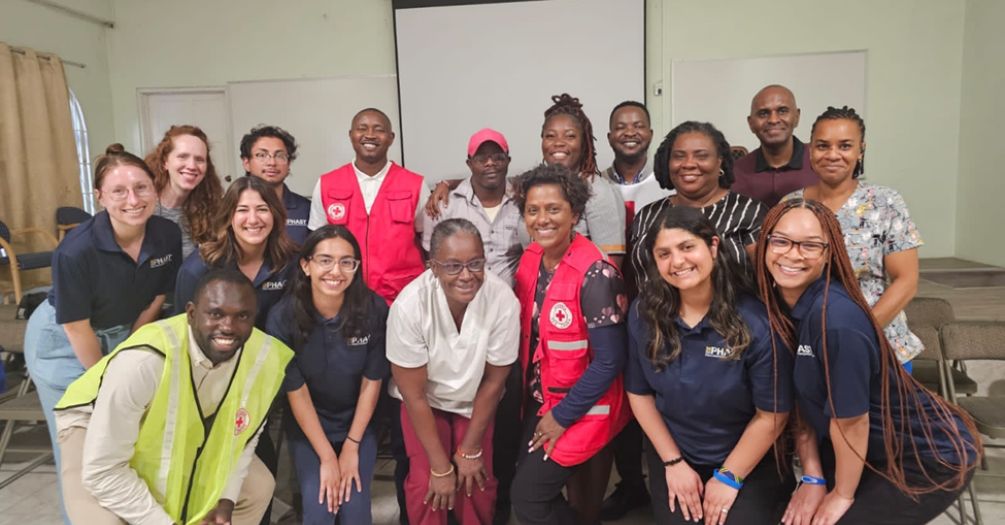
My name is Johnny. I am in my final year at Michigan as a dual masters student in Public Health and Social Work, with a focus of Health Behavior and Health Equity. As I prepare to travel to Grenada this spring break, I find myself sitting in the space between excitement and humility. This experience—working alongside the Ministry on a project focused on increasing disability inclusion—feels like both an opportunity and a responsibility. I am not arriving with answers; I am arriving with questions, curiosity, and a commitment to learning.
I anticipate that this experience will challenge how I understand disability, inclusion, and public health practice beyond the U.S. context. Inclusion is deeply shaped by culture, infrastructure, policy, and history, and I am eager to learn how these forces intersect on the island. I expect to gain a more grounded understanding of how ministries balance limited resources with expansive community needs, and how inclusion efforts are shaped by local priorities rather than external frameworks. I hope to see how community members themselves define accessibility, dignity, and participation—and how those definitions may differ from what I have been taught in academic settings.
At the same time, I carry some apprehension. I am mindful of the risk of unintentionally imposing outside perspectives or assumptions, especially as a visiting student. I worry about the possibility of misunderstanding cultural norms or oversimplifying complex structural challenges. These concerns, however, reinforce my personal goal for this experience: to practice cultural humility and reflexivity. I want to approach this work with openness, recognizing that meaningful public health partnerships are built through trust, respect, and long-term thinking—not quick solutions.
Personally, I hope this experience strengthens my ability to translate public health theory into practice. Working on disability inclusion will push me to think more critically about equity, not as an abstract, but as something that must be intentionally designed into policies, spaces, and systems. I also hope to grow more comfortable sitting with ambiguity—acknowledging that progress may look incremental, and that my role may be supportive rather than directive.
As I prepare to embark on this journey, I am excited not just for what I will contribute, but for what I will learn. I expect to leave Grenada with a deeper appreciation for community-driven public health work, a more nuanced understanding of disability inclusion, and a renewed commitment to centering lived experience in everything I do. Above all, I hope to leave having listened well.