The Power Of A Single Voice: Lessons Learned From San Antonio
Elayna Swift
1st Year MPH Health Behavior, Health Equity Student
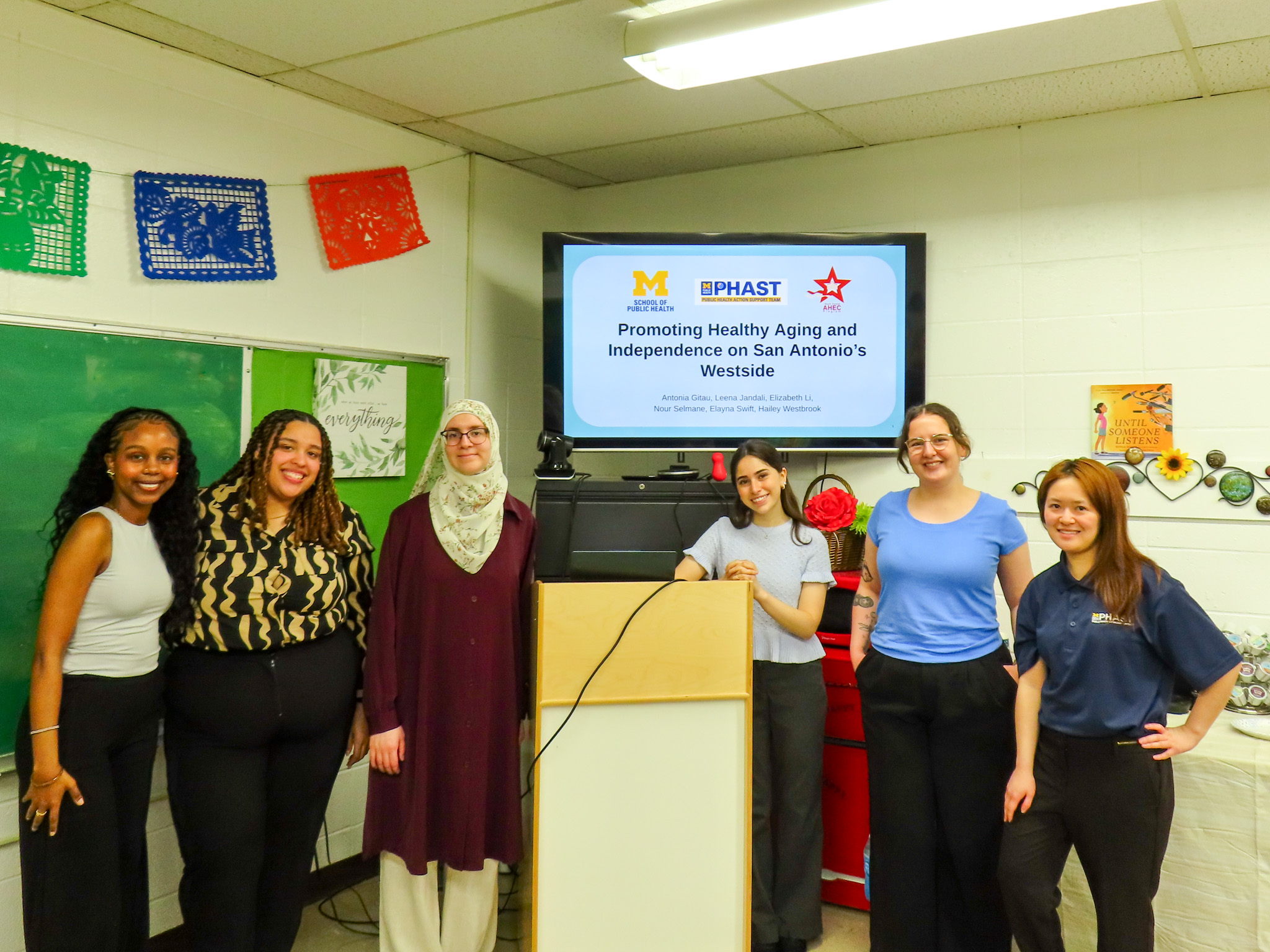
Engaging with seniors in the Westside San Antonio community gave me valuable insights that will stick with me throughout my career. Because this was my first fieldwork experience, I spent time before the trip reflecting on everything I’ve learned throughout my public health education, from practical skills like focus group facilitation and survey administration to relational skills such as cultural humility and ethical practice. While the classroom-based community engagement education I’ve received proved useful, I found that, as one might expect, a hands-on experience in a community teaches you many more unforgettable lessons in a much shorter period of time.
The most memorable aspect of this experience, for me, came from one woman, Ana*, who was an engaged participant throughout our week in Texas. Through our conversations and her contributions to our data collection, she showed me how powerful a single voice can be in advocating for a community if you can find a way to use it. Although our study population was similar in age, ethnicity, and area of residence, Ana represented an underrepresented group within that community: Older adults who may be uninsured or lacking stable housing. Ana was the voice that highlighted the unique barriers these community members face, and when she received pushback from those who didn’t understand her perspective, she became even more determined to make that perspective heard.
To be clear, we learned so much from every conversation with our research participants. Without each of their input, we wouldn’t have learned as much about the Westside as we did. We heard about the strength of the community, the interconnectedness among neighbors and families, and the support that churches, nonprofits, and community members offer one another. But without Ana, we would have completely missed the perspectives of the most vulnerable community members in the Westside. Ana was aware of this and made a point of having her voice heard, demonstrating bravery and vulnerability in a room where others didn’t share her perspective.
I am so grateful to Ana for her courage and her determination to ensure her community’s most marginalized members were represented. This experience reminded me that public health fieldwork is not just about applying the skills I have learned in the classroom, but about listening closely enough to recognize whose voices are missing. As I continue in my public health career, I will carry Ana’s example with me as a reminder that meaningful community engagement requires humility, attentiveness, and a commitment to making space for perspectives that might otherwise go unheard.
*Name has been changed to protect privacy.