Investigating racism’s impact on birth outcomes
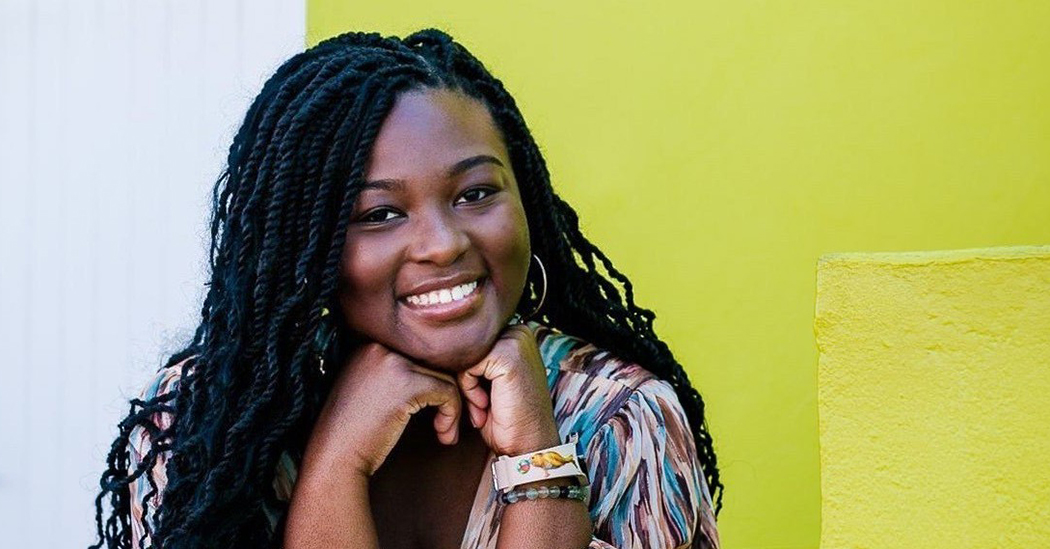
Q&A with University of Michigan researcher Safyer McKenzie-Sampson on racism’s impact on reproductive health
Safyer McKenzie-Sampson’s path to becoming the John G. Searle Assistant Professor in the Department of Health Behavior & Health Equity at the University of Michigan School of Public Health began with a stethoscope and a dream.
Growing up in downtown Toronto in a large Caribbean immigrant family, McKenzie-Sampson watched as close relatives navigated the healthcare system while living with sickle cell anemia. The constant hospital visits and doctor appointments sparked her initial interest in medicine, leading her parents to buy her a stethoscope at age 6 inscribed with “Dr. Safyer McKenzie-Sampson.”
While en route to achieving her goal, she took an unexpected turn during her undergraduate studies at the University of Ottawa, where she earned a bachelor’s degree in Biopharmaceutical Sciences with a concentration in Genomics. A chance encounter with a PBS documentary about health disparities changed everything, redirecting her from pharmacy school toward public health and the epidemiology of racial health inequities.
“I was immediately hooked and went down a rabbit hole to understand the field of public health and the epidemiology of racial health disparities,” McKenzie-Sampson said. “I quickly realized that I wanted to contribute to this work and started plans to apply for a master’s degree in public health.
“In the end, I still became Dr. McKenzie-Sampson, just not in the way my family had envisioned.”
She went to obtain a Master of Science degree in Public Health from McGill University and a PhD in Epidemiology and Translational Science from the University of California San Francisco.
Now at Michigan Public Health, McKenzie-Sampson focuses her research on the multi-level impacts of racial discrimination on adverse perinatal outcomes in Black communities. Her work uniquely examines these outcomes through the lens of maternal nativity, highlighting the experiences of Black immigrants—a perspective informed by her own family’s immigration story from Jamaica and Guyana.
As principal investigator of the AZANIA study, a mixed-methods pilot project examining pregnancy and childbirth experiences of African immigrants in California, McKenzie-Sampson bridges academic research with community practice. Beyond her scholarly work, she supports families as a full-spectrum community doula, embodying the birth justice principles that drive her research.
Her appointment at Michigan marks another milestone in a career dedicated to understanding and addressing structural racism’s impact on reproductive health, translating findings into interventions that can create meaningful change for Black families and communities.
I gravitated to Health Behavior & Health Equity because of the amazing interdisciplinary faculty and opportunity to collaborate with such a diverse group of scholars and students who are all passionate about creating the conditions for health equity across a range of populations and health outcomes.”
What parts of public health are the most interesting for you?
I think all public health practitioners recognize that health issues are shaped by multilevel and complex socio-environmental factors at the individual and community-level. For me, the most interesting parts of public health are discovered when working directly with the communities most adversely impacted by a public health problem to find long lasting solutions.
What was your experience at Stanford University and how did it shape your research perspective?
My most recent position was as an Instructor and IDEAL Provostial Fellow at Stanford University. I am grateful for the IDEAL fellowship, because this program was built around bringing together scholars who study race across disciplines. I was exposed to the amazing work of colleagues who specialize in understanding the impacts of race in the context of education, sociology and linguistics. This has really broadened my outlook on public health interventions, and how I approach understanding the far-reaching impacts of public health policies on other disciplines.
What drew you to the Department Health Behavior & Health Equity?
I gravitated to Health Behavior & Health Equity because of the amazing interdisciplinary faculty and opportunity to collaborate with such a diverse group of scholars and students who are all passionate about creating the conditions for health equity across a range of populations and health outcomes.
What is your main area of research?
My main area of research is around understanding the multilevel impacts of racism, discrimination and mistreatment broadly on the risk of adverse outcomes of pregnancy and childbirth, with the goal of developing interventions that can increase health equity and reproductive justice. I focus the majority of my research on the experiences of Black families during pregnancy and childbirth in the United States, with particular interest in highlighting the experiences of African and Caribbean immigrants.
When we prioritize addressing the root causes of health inequities and improving the health of historically oppressed/marginalized communities, we are having a positive impact on public health for all.”
As a Black woman in academia, I’ve often been the only Black woman in my programs and research experiences, which can be incredibly isolating and often leads to microaggressions. This personal experience has deepened my understanding of how systemic barriers affect not just research subjects, but researchers themselves.
My interests in measuring the impacts of racism on health were developed near the end of my undergrad career, and this only grew during the pursuit of my master’s degree. I think my initial interest in being a pediatrician always lingered in my mind and pushed me toward child health. My master’s program required an internship so I ended up working for a summer at the Quebec Public Health Institute (INSPQ) with an amazing perinatal epidemiologist, Dr. Nathalie Auger, and I completed a portrait of preterm birth in the province. This experience exposed me to the complexities of pregnancy and childbirth in general, and how adverse exposures during pregnancy can have enduring impacts long after birth. After this experience, I knew that going forward I wanted to focus on how racism could shape maternal and child health outcomes like preterm birth, cesarean delivery and low birthweight.
My focus on Black immigrant birthing populations is shaped by my familial history growing up in a Black immigrant family, and my personal interest in highlighting the diversity of experiences within the Black diaspora. Blackness is not a monolith; we all have different cultural backgrounds and life experiences, and this ultimately shapes the way that Black individuals interact with the healthcare system and the effectiveness of public health programs, which is often ignored.
What does receiving the John G. Searle Assistant Professorship mean for your research and career?
I am immensely grateful for the nomination as the John G. Searle Assistant Professor for the Department of Health Behavior & Health Equity. This title means so much to me because it recognizes the contributions that I’ve already made to the field of health equity, and the Searle Professorship will enable me to expand my program of research and continue to grow as a junior faculty member in the department.
What is something about public health you wish everyone knew?
When we prioritize addressing the root causes of health inequities and improving the health of historically oppressed/marginalized communities, we are having a positive impact on public health for all.
In other words, all populations will benefit from the removal of systemic barriers, and an improvement in the social determinants of health is what helps us approach true justice and equity.
Written by Bob Cunningham
Media Contact
Destiny Cook
PR and Communications ManagerUniversity of Michigan School of Public Health734-647-8650