M-PACT Scholar brings youth-centered research home
Q&A with University of Michigan researcher Asari Offiong on adolescent health and community-based participatory research
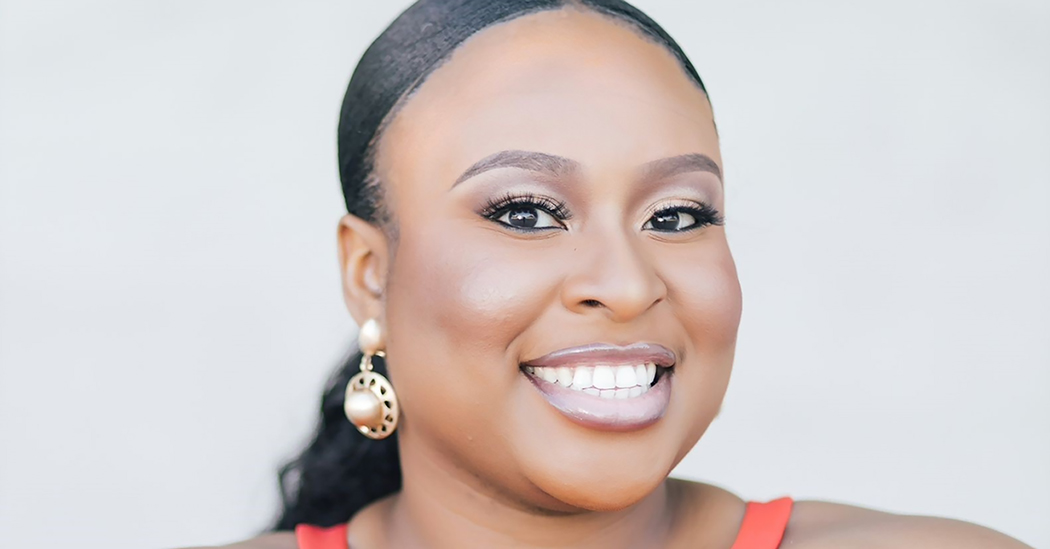
The notification came as Asari Offiong was wrapping up her work at Child Trends in Washington, DC, where she spent years translating adolescent health research into real-world programs and policies.
She had been selected as one of just 12 scholars for the University of Michigan’s prestigious M-PACT program, a federally funded initiative aimed at transforming academic culture through diverse faculty recruitment.
For many new faculty members, such an appointment would simply mark the beginning of their academic career. For Offiong, it represented something deeper: a homecoming to the institution where her own transformation began.
Born in London and raised in Detroit after her Nigerian parents immigrated to the United States when she was 5, Offiong started in the College of Literature, Science, and the Arts (LSA) as an undergraduate student pursuing a bachelor’s degree in Brain, Behavioral, and Cognitive Science. Now, years after earning an MPH in International Health & Maternal and Child Health from Boston University and a PhD in Population, Family & Reproductive Health from Johns Hopkins University, she’s back—this time as an assistant professor in the School of Public Health’s Department of Health Behavior & Health Equity.
The Michigan Program for Advancing Cultural Transformation, funded by the National Institutes of Health, represents more than traditional faculty recruitment. The program spans 11 schools and colleges, bringing together researchers whose expertise covers everything from preventing early substance use to developing AI-driven precision diagnostics. But its true innovation lies in its cohort-based model, creating a shared community that supports faculty as they transition to independent researchers.
“Most of my mentors, particularly faculty of color, wished they had more support and structures in place to guide them,” Offiong said. “This program does that.”
What excites her most isn’t just the immediate support, but the program’s long-term vision.
“The knowledge I’m gaining will transfer to the next generation,” she said. “We could literally shift the culture of this university.”
Offiong brings more than a decade of experience in youth development programs and community-based participatory research to her new role. At Child Trends, she worked as a senior research scientist in sexual and reproductive health, focusing on the intersection of research and practice. Her approach deliberately reframes how society views young people, describing adolescents as “at-promise” rather than “at-risk.”
Her research centers on adolescent sexual and reproductive health, integrating reproductive justice and youth-centered perspectives to understand how young people navigate complex health decisions. She works specifically with vulnerable populations, including expectant and parenting youth, using community voices to develop culturally relevant programs and policies that address systemic barriers rather than individual deficits.
Now back in Ann Arbor, Offiong sees her role as building bridges: between research and practice, campus and community, and the experiences of young people and the policies that affect their lives. It’s work that brings her full circle, from the Detroit teenager who first discovered the power of education at the University of Michigan to the scholar now positioned to transform how the university approaches faculty development and community engagement.
What aspects of public health interest you most?
I’ve always loved working with young people, so I’m specifically focused on adolescent health—that developmental period from about 12 years old through emerging adulthood, which goes to about 25. I really understand that 12-19-year-olds and 18-25-year-olds have very different experiences and needs than school-age kids. A lot of people don't want to work with teens because they think they’re “too much,” but I really embrace that energy and love that part of my work.
How did your background influence your interest in public health?
Growing up as a Nigerian-American, mental health was very taboo in my culture, and it still is. I wanted to merge these worlds of culture, mental health, science and youth development. I thought I wanted to be a child psychiatrist, but when I took a gap year to do my master’s in public health, I realized it wasn’t medicine I was interested in—it was public health. I wanted to think about things on a community level, creating programs and policies that impact everyday people’s lives.
What challenges have you overcome in your career?
As a Black woman and early immigrant, I’ve faced both overt and subtle challenges. My parents worked multiple jobs and always said I could do anything if I went to school, but they didn't have deep knowledge of how to navigate this system. I often had to figure things out through trial and error. The higher I’ve gone in education, imposter syndrome has been very real, questioning whether these spaces are prepared to welcome me as my full self. The COVID-19 pandemic in 2020 was especially challenging when I lost my younger brother while working on my dissertation and had to care for my mother, who also got sick.
What drew you to Michigan’s Department of Health Behavior & Health Equity?
The department’s focus on community-based participatory research was the biggest draw. Having faculty who understand and value this methodology—like Barbara Israel, professor emerita, the queen of CBPR—was incredibly exciting. I wanted to be among faculty who share these values of including community voices in research. The department also has other heavyweights like Arline Geronimus, whom I cited in my dissertation; and Marc Zimmerman—when you think of positive youth development, you think of Marc. Being in a department with such distinguished history in sexual health, public health and implementation science just felt like the perfect fit.
What are you most excited about in returning to Michigan?
It’s a full-circle moment for me. Being a Michigan student was the most transformative experience of my young adulthood—where my best friendships formed and I grew personally and academically. Now I can give back to this community. I’m excited to bring my perspective as a Black woman who grew up in Detroit to add richness and rigor to our research and classrooms. I intentionally live in Detroit because I’m committed to the city and want to connect students here to Detroit as well.
What do you wish everyone knew about public health?
Everything is a public health issue. The roads we drive on, the cars we drive, our environment, the resources we have—everything is connected to public health. When people understand how broad and deep public health is, they will value the work we do more. There will be more resources, more funding and more respect for the research, especially for those of us on the social and behavioral sciences side.
Written by Bob Cunningham
Media Contact
Destiny Cook
PR and Communications ManagerUniversity of Michigan School of Public Health734-647-8650