Who will rural voters blame for harmful healthcare changes, policies this election?
U-M School of Public Health researcher asks if this midterm might be the election to redefine them
Inflation and affordability, immigration and international conflicts may be dominating much of the news—and voters' attention—but healthcare, as always, still matters at the ballot box—perhaps even more so for rural voters.
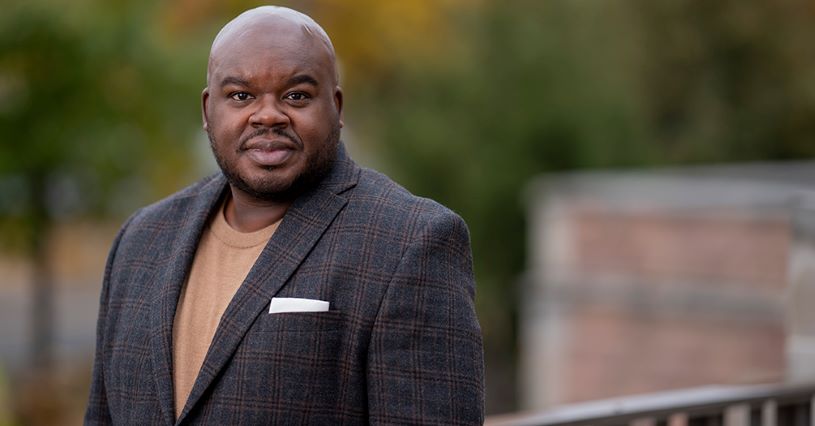
Michael Shepherd, assistant professor of health management and policy at the University of Michigan School of Public Health, researches rural residents' voting behaviors and how they connect to their influential media and information ecosystem amid detrimental changes that affect rural voters to a greater degree: hospital closures, the loss of medical care such as labor and delivery, and changes to Medicare, Medicaid, SNAP and health insurance.
Shepherd, author of the recently released, "Rural Pain, Republican Gain," has also studied hospital access using voter data and found significant geographic and partisan differences in distance to emergency care. He looks to his studies, surveys and interactions with rural voters to explain voting behaviors—historically and how they may play out in the upcoming election.
Are healthcare concerns may be overshadowed by other issues this election?
I would say healthcare is not far from the top of many people's minds this election. With the expiration of the ACA premium subsidies, with changes to the functioning of the Medicaid program and rural hospital closures, healthcare is without a doubt one of the most important issues this cycle.
How might those changes play out at the polls?
In general, we see two types of effects when we explore the way healthcare influences people's voting behaviors. One is that declining access tends to make it harder for people who have lower health status or reduced healthcare access to vote because they end up having to spend more time navigating their new healthcare environment. But the second way is who they vote for, and oftentimes what we see is that the incumbent status of the White House really shapes who people blame for their declining health care access.
What we see with rural voters is a tendency to blame the Democratic party for bad healthcare outcomes regardless of who's in charge of the White House or the governor's mansion. Part of that is how rural information ecosystems function and who rural people learn about politics from. In general, it's fair to say that voters overall tend to blame the incumbent president's party for bad outcomes that they experience.
Do you have data, statistics on rural voting attitudes?
For sure. One of the best examples of this dynamic that I have in my research for rural voters is rural responses to hospital closures over the last 15 years. What we saw is that upwards of 80% of rural hospital closures occurred in the Republican-controlled states that did not expand Medicaid. However, rural voters responded by blaming the Affordable Care Act and federal Democrats for these policies and actually rewarding state-level Republicans for these outcomes.
When we look at rural voters, we see that these healthcare experiences can be quite informative and quite important for shaping their electoral voting decisions. I think the open question is are we in a new era? A lot of my research focused on the Obama years, the first Trump administration and the Biden administration, but we're in a different political moment than we were during those times. So there's a world where the salience of Trump administration policies and the salience of the outcomes affecting rural communities now shape people's voting behaviors in different ways. But, if prior trends hold true, then what we might expect is to see rural voters still attributing blame to the Democratic party or at a minimum not blaming the Republican party for the outcomes that have occurred over the last few years.
Why does that tend to hold true?
There are a few things that happen in rural areas. One is the rural media environment and information ecosystem. So there aren't very many small town or rural newspapers anymore that provide up-to-date accurate information about why something like a hospital closure has occurred. Instead what we see is that rural folks tend to learn about the political happenings of the world from a mixture of national news outlets like Fox News or conservative talk radio as well as from social media, peers, neighbors who are particularly invested in politics. A lot of those sources end up being quite conservative relative to traditional local news media. And so when something bad happens in a rural area, rural people are provided a particular kind of narrative for why this thing occurred in their community in ways that push them rightward.
The other thing happening is that voters often believe that the Democratic party is the party that quote unquote owns the issue of healthcare. That means when there are health policy changes, voters tend to associate that with things that the Democratic party has done. Most political scientists view that as a strength—that when there are things occurring in the environment related to healthcare that should be a real win for the Democrats. But if those things that are happening are bad outcomes and those outcomes are somewhat easily attached to either present or previous Democratic policy or other Democratic party activities, then that owning of an issue might become a real vulnerability for a political party.
What do you think about the possibility of a shift in blame this election?
There are a lot of things that are different about our current moment than many of the years of data that I've spent time with. One is that there's a lot more media coverage right now of what's happening in rural healthcare in general. When I started my work it was pretty rare to find national news stories or really any news stories about why a random rural hospital closure had happened. But now there's actually quite a lot of coverage and a lot of that coverage connects the outcomes of these closures to the Big Beautiful Bill and to policies of the Trump administration. That alone could have pretty seismic effects on how we think about whether or not blame will be attributed to one party or another.
The other thing is that a lot of the outcomes that I've studied previously were following the enactment of the Affordable Care Act, which I think gave politicians an easy, you know, boogeyman to blame for the outcomes that were affecting rural communities. Now, we're many years removed from the implementation of the Affordable Care Act, which means its connection to these outcomes may be harder to make. Instead we're much closer to the Big Beautiful Bill and its effects on healthcare access. When you pair that with enhanced or increased media coverage, we might be in a world where voters are thinking about health policy in a different way and maybe attributing blame to Republicans.
Are there particular healthcare issues that resonate with Michigan voters?
You know, in general, we think that our politics has become so nationalized that the same sets of issues and characteristics or election dynamics affect all races somewhat similarly. And so in that way, we might think, well, there's not really much unique about Michigan other than it's a particularly competitive state. However, there are some things that I think may provide some unique sources of interest for voters, one of which is that Michigan has recently lost a rural hospital. We expect there to be many more of these over the next few years, but there's been a particularly salient loss of a hospital in Sturgis, Michigan. And so we might think that the congressional district that includes that hospital or the Senate race in general might have some unique effect there where that experience is able to be capitalized on by one party or the other to influence the election in general.
Rural health in Michigan is a little bit better than the national average. Access is a little bit better than the national average. But there are some unique struggles that make things that occur in Michigan feel differently than others. And I always like to point to the existence of the Upper Peninsula as something that provides a set of unique rural healthcare challenges that are made extra difficult by hospital closures or the ending of labor and delivery units in particular hospitals. Navigating an hour-and-a-half or two-hour drive in the Upper Peninsula in the middle of winter is a pretty difficult prospect. We might think that changes to rural healthcare access in regions like that could be felt particularly strongly and may be particularly mobilizing for affected voters.
In meeting and interviewing people through the years, are there examples of that link between policy change and voting?
Most of my research is quantitative in nature and so the people that I'm talking to are necessarily in many cases anonymous to me and it's hard for me to have a good feel for the ins and outs of their lives. But over the years I've spent quite a lot of time talking to different rural voters in different communities ranging from Texas to Connecticut and have spent some time in a variety of different communities.
Healthcare is a kind of issue that comes up a lot when people express what they're irritated about with politics. I'll always remember a conversation that I had with a man in Tennessee who was talking to me about the closure of the hospital in his community and how it meant he was going to be spending an hour and a half or two hours in the car to get to the hospital with some frequency because of a chronic condition that he had and how irritated he was about this. But the person's understanding of that experience politically was that this was something that had to do with Democrats, that this was something that had to do with Barack Obama.
And so when we think about voters, do they care about health care as a political issue? The answer is yes. It's one of the most important issues to them. But what becomes more complicated is how particular groups of people or how particular individuals assign blame for those experiences. And we know that that's a really difficult proposition for any voter really for many political issues, but healthcare is so complex. It's very easy for narratives to be created from political actors that shape how people understand what's happening to them.
Media Contact
Kim North Shine
Senior Public Relations Representative, Health Sciences
Michigan News
[email protected]
313-549-4995