Building a health system people can trust
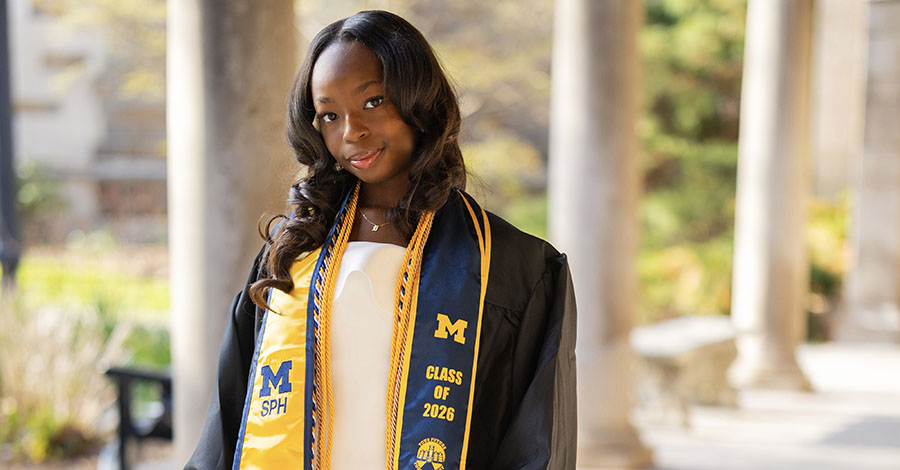
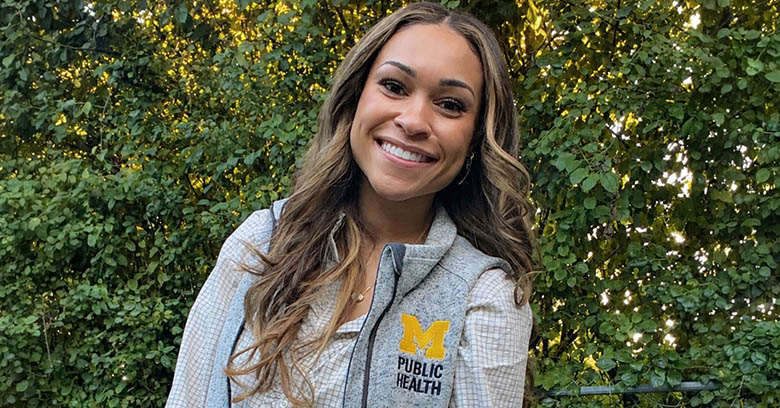
Sabrenda Braceful, BA ’26
Master of Health Services Administration student
By Bob Cunningham
When Sabrenda Braceful talks about hospitals, rather than starting the conversation with buildings or budgets, she starts with her family.
On Detroit’s east side, where she grew up, many of her relatives avoided the doctor. Long wait times, providers who didn’t seem to listen, and a deep, historic mistrust of the medical system kept them away. Braceful saw the problem up close.
Now, as a first-year student in the Master of Health Services Administration (MHSA) program at the University of Michigan School of Public Health, she is training to help fix it.
“I really love to help people, but I want to help behind the scenes,” she said.
That means becoming a health administrator, one of the leaders who decide how hospitals spend money, where resources go and how patients experience care.
Braceful’s path to Michigan Public Health started early. Around age 5, her family moved to Southfield. Her father wanted her to be college ready, and at the time, Detroit’s public schools weren’t meeting the family’s standards. The move opened a door to Wolverine Pathways, a University of Michigan program that prepares students for college.
Southfield was where she went to school, but Detroit never stopped being home. Today, when people ask where she’s from, her answer is simple: Detroit.
Her father also gave her advice that shaped her future.
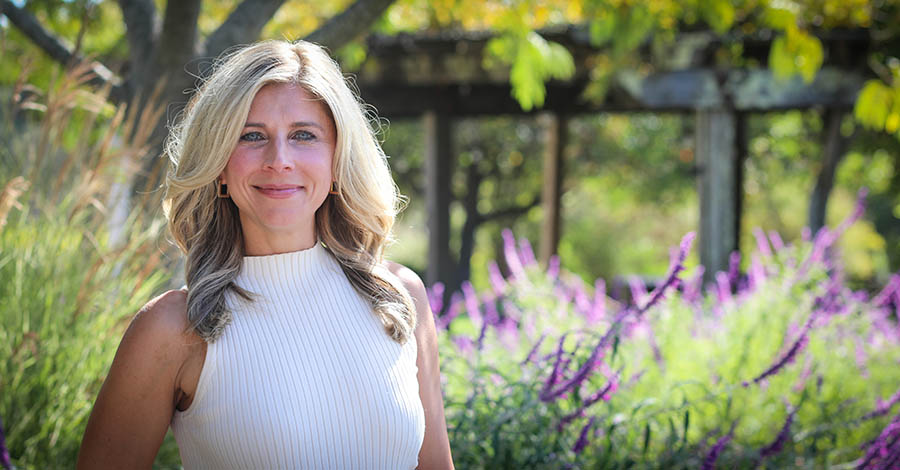
Diverse perspectives are very important in healthcare outcomes, having leaders who by experience and/or background bring their authentic perspectives to problem solving enriches the organization. Sabrenda is a very talented emerging leader who brings her authentic self to her healthcare leadership journey.”
— Denise Brooks-Williams on Sabrenda Braceful
In high school, he urged her to research careers before choosing a college major. Braceful found health management and policy, and it clicked. She didn’t want to work on the front lines as a provider. She wanted to shape the systems that providers work in.
At the University of Michigan, Braceful arrived as an undecided freshman with a strong hunch about public health. Her first course, Public Health 200, turned that hunch into certainty. She credits her professors, who welcomed her questions, shared their research, and made office hours feel like a place she wanted to be.
“They make me feel like public health is home,” she said.
Her next big step came through SEP-HEALTHSpark, the Summer Enrichment Program in Health Equity and Leadership Training in Healthcare and Public Health. Founded by Richard Lichenstein, associate professor emeritus of Health Management and Policy, in 1986 as the University of Michigan Summer Enrichment Program (UMSEP), the eight-week program is run by the Department of Health Management and Policy and is highly selective. Only 10 or 11 undergraduates from across the country are chosen each year, and each is paired with a healthcare organization.
Braceful interned at Henry Ford Health, where she met Denise Brooks-Williams, MHSA ’91, the health system’s chief operating officer.
For Braceful, the experience was life-changing.
“She’s a living example of how African American women can bring their own perspectives into the C-suite and become health executives,” Braceful said.
“Diverse perspectives are very important in healthcare outcomes, having leaders who by experience and/or background bring their authentic perspectives to problem solving enriches the organization,” Brooks-Williams said. “Sabrenda is a very talented emerging leader who brings her authentic self to her healthcare leadership journey.”
The internship also taught Braceful a lasting lesson about power. Administrators decide where resources go, and when leaders from underserved communities are in the room, she said, their perspectives—which might otherwise be missing from the conversation—can help improve the quality of patient care.
Not every lesson came easily. During her first year in the public health program, Braceful studied abroad in Santiago, Dominican Republic, for a public health practicum. The entire program was in Spanish, and she was a basic to intermediate speaker.
She called it one of the hardest things she has ever done. Providers spoke quickly, her classmates had stronger Spanish skills, and for the first time she felt imposter syndrome. Braceful pushed through by leaning on her host mom, who helped her slow down and practice, and on her own confidence.
The experience paid off. Braceful noticed that many Dominicans, like many people in her own community, are wary of hospitals and often try holistic remedies at home first. The parallel gave her new ideas about how hospital leaders can train providers to be more culturally aware, so patients feel safe seeking care before a small problem becomes a big one.
Braceful didn’t wait to get involved on campus. As a freshman, she went looking for a public health group that reflected her identity, and she found the Public Health Students of African Descent (PHSAD).
Founded in 1987, PHSAD is the School of Public Health’s oldest student-sponsored organization. Its mission is to build belonging for people of color and people of African descent in public health, while welcoming everyone to take part in advancing health equity, community service and professional growth.
She remembers her first meeting clearly.
“This is my community. This is where I want to be,” she said.
She spent her first two years as a member, then joined the executive board in her third year. She started as social media and marketing chair, moved to organizational affairs chair, then secretary, and is now president.
Michigan prepares you to be the best person you can be, not only in your career, but in life.”
— Sabrenda Braceful
Her biggest project is a milestone.
In March 2027, PHSAD will host its 40th annual Health Equity Conference. The event brings together students and alumni from across the School of Public Health for fireside chats, activities, and conversations about real public health challenges. The most recent theme was environmental health. The focus for 2027 is Black success in the healthcare field and what it looks like.
Braceful’s résumé shows how deeply she cares about her hometown. As a freshman, she joined the Undergraduate Research Opportunity Program (UROP) and studied how racial residential segregation affects access to healthcare facilities. She later worked as a UROP peer facilitator for two years, guiding other students through their own research.
Braceful then became a program coordinator for the Detroit Community-Engaged Research Program (DCERP). There, she contributed to designing a public health curriculum for 11 students who partnered with Detroit organizations on summer research projects, including building data dashboards. She also taught the history of her city and how to enter neighborhoods with respect and cultural awareness, instead of arriving as outsiders trying to “fix” things.
With about a year and a half left in her graduate program, Braceful isn’t slowing down. Her to-do list includes keeping PHSAD strong for future classes, landing a health administration internship in Metro Detroit, competing in case competitions, and applying for an administrative fellowship.
After graduation, she might stay in Michigan or head to the East or West Coast. Either way, she hopes to return to Metro Detroit and give back to the community that raised her.
At Michigan Public Health, her studies are supported by the Richard Lichtenstein UMSEP Alumni Scholarship Fund and the Warden Family Fellowship Endowment. The coursework is demanding, she said, but she loves it.
For students weighing their own choices, Braceful has a clear message about what Michigan Public Health offers:
“Michigan prepares you to be the best person you can be, not only in your career, but in life.”