Senior lands full-time position at Eli Lilly before graduation
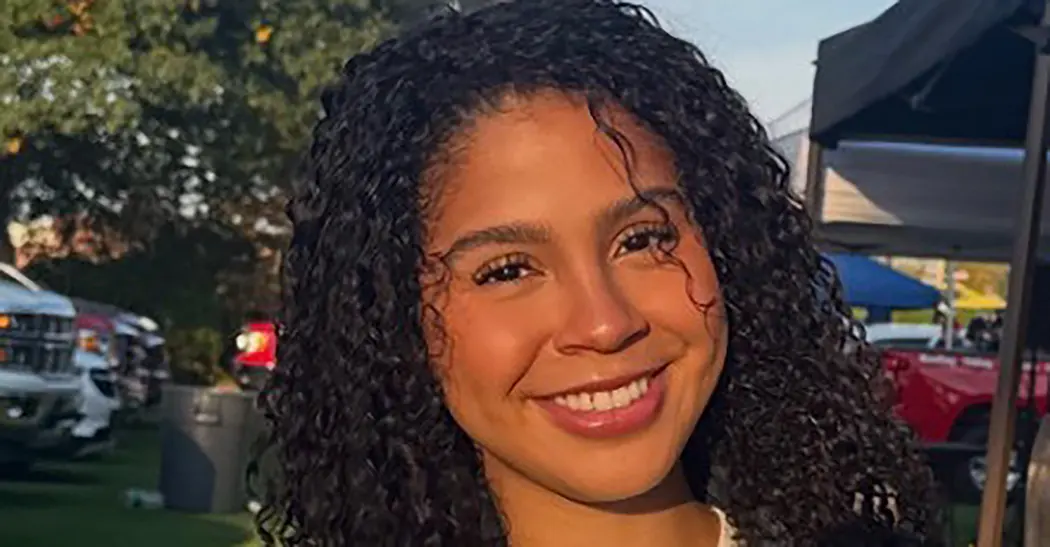
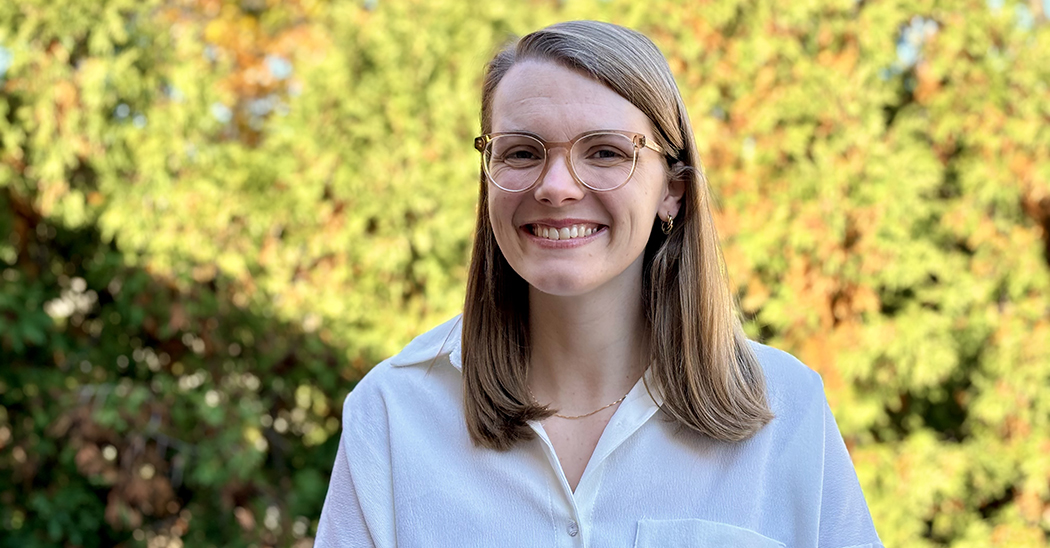
Sydney McKinnon, BA ’26
Community and Global Public Health
By Bob Cunningham
As a high school student, Sydney McKinnon worked as a dental assistant in her hometown of Victor, New York. Instead of just observing people getting their teeth cleaned, she started asking deeper questions.
“What’s going on behind the scenes for them to get here? How difficult is it for them to get here right now?” McKinnon said. “It’s not as simple as the person just coming into the waiting room for that appointment.”
Those questions led the University of Michigan senior from a pre-dental track to public health—and eventually to a full-time job offer from Eli Lilly before she even graduates on April 30.
Discovering public health
When McKinnon first arrived at the University of Michigan in Fall 2022, she was set on becoming a dentist. She spent her first two years as a Biology, Health, and Society major in the College of Literature, Science, and the Arts, following the traditional pre-med path.
But something felt incomplete.
“I’d always been really interested in science—I was always a science, math, STEM girl,” McKinnon said. “But I always knew that I was good at reading and writing and analyzing. I kind of just wanted a more holistic college experience.”
The switch to public health happened through connections—a pattern that would define McKinnon’s college experience. Through her involvement in Phi Chi Medical Fraternity and her sorority, she met students who couldn't stop talking about the School of Public Health’s thriving undergraduate program.
She took Public Health 200 with Emily Youatt, director of Undergraduate Education and clinical associate professor of Health Behavior & Health Equity.
Everything clicked.
“That class definitely solidified for me that public health was the right path for me,” McKinnon said. “Just learning about all the different mechanisms of public health—public health and politics, public health and the government—definitely piqued my interest.”
He taught me about cultural humility—not just being culturally competent, but having cultural humility. Always being willing to learn from the communities that you’re in, always evolving, always listening.”
— Sydney McKinnon, Michigan Public Health senior on learning from longtime faculty member Gary Harper
McKinnon chose the Community and Global Public Health BA program because she wanted to develop her writing and analytical skills alongside her scientific knowledge.
“The Bachelor of Arts program challenges people to wrap their head around public health concepts,” she said. “You can’t just get away with understanding it—you have to write about it, analyze it deeply.”
Public Health 360 with Gary Harper, professor of Health Behavior & Health Equity, particularly influenced her thinking.
“He taught me about cultural humility—not just being culturally competent, but having cultural humility,” McKinnon said. “Always being willing to learn from the communities that you’re in, always evolving, always listening.”
This perspective shaped how McKinnon approached everything, including a part-time job she has maintained throughout college as a substitute teacher and teacher’s aide back home in Victor, working primarily with special education students.
“On the surface, teaching might not seem related to public health, but it really is,” she said. “The human side of public health and working with people has been probably the most important part of me working in the classroom successfully.”
The path to Eli Lilly
In September of her junior year, McKinnon heard about Eli Lilly’s campus recruitment day from a sorority sister who had previously worked at the pharmaceutical company. She wasn’t familiar with Eli Lilly or pharmaceutical sales, but she decided to check it out.
The company held several events that day, including sessions at Michigan Public Health. McKinnon showed up in the morning and stayed much longer than planned.
“People were approaching me from Lilly, and that’s so huge because they really don't have to do that,” she said. “They just felt so willing to help. I ended up staying way later than I should have. It was so funny—I was just talking with everyone in the company.”
Those conversations led to an application, then an interview and, ultimately, a 10-week summer internship position. By November of her junior year, her summer plans were set.
My public health perspective allowed me to identify why certain communities may not be able to access certain pharmaceutical drugs. It made me able to participate in team discussions more, even as an intern.”
The internship placed McKinnon outside Detroit as a cardiometabolic health pharmaceutical sales intern. It was her first real exposure to Detroit and its surrounding communities—and her public health training immediately became relevant.
“Access looks so different compared to Metro Detroit and the suburbs of Michigan,” McKinnon said. “From Detroit to Bloomfield Hills, every single area looks different.”
Her ability to identify gaps and barriers in healthcare access made her stand out, even as an intern. While others focused primarily on the pharmaceutical products themselves, McKinnon brought a broader perspective to team discussions.
“My public health perspective allowed me to identify why certain communities may not be able to access certain pharmaceutical drugs,” she said. “It made me able to participate in team discussions more, even as an intern.”
After her internship concluded in August, there was a waiting period. Then came the news: Eli Lilly wanted her back. Not as an intern, but as a full-time assistant territory manager in its Cardiometabolic Health Unit starting after graduation.
“They are just amazing people,” McKinnon said. “I’m very thankful to be going back.”
Setting the groundwork
Landing a job before graduation, especially in today’s challenging job market, puts McKinnon in an enviable position. But she’s quick to share the lessons that got her there.
“Your network is your net worth,” she said. “Start early when you’re looking for opportunities, and the biggest thing is to ask people about their paths. Don’t be afraid to reach out to people and ask for help.”
But networking alone isn’t enough.
“The whole job is the interview,” she said. “The interview never stops when you're working an internship. Every day is the interview. You have to prove every single day why they should bring you back.”
McKinnon’s path wasn’t without obstacles. She speaks openly about managing anxiety while navigating Michigan’s rigorous academic environment.
“Balancing school among work and expectations, especially at the University of Michigan, is really difficult, and it definitely amplified my anxiety that I dealt with,” she said. “The first two years of college were very difficult for me.”
Your network is your net worth. Start early when you’re looking for opportunities, and the biggest thing is to ask people about their paths. Don’t be afraid to reach out to people and ask for help.”
The turning point came when she stopped trying to power through stress and started acknowledging her feelings. She leaned on her support system—friends at Michigan and family back home—and learned to recognize when she needed breaks.
“As unfortunate and difficult as it can be dealing with mental health problems, in a way it’s made me more empathetic while working in public health,” McKinnon said. “When you realize that there are things behind the scenes that you can’t see that people are struggling with, that’s such a crucial part of understanding people when it comes to public health.”
She also acknowledges how her identity as a Black woman has shaped her experience.
“Experiencing some of those social inequities and imbalances in the system has definitely been a meaningful part of my public health experience,” McKinnon said. “Being able to connect with other students who also acknowledge and appreciate working through those inequities has been huge. As much as it can be a challenge in this world, it’s been a great perspective for me while learning more about public health.”
Looking to the future
As graduation approaches, McKinnon has clear goals for her career in pharmaceutical sales and beyond. In the short term, she wants to inspire others to learn about public health and bring that perspective into the pharmaceutical industry.
“I think public health is very key, but it can be missing a lot of the time,” she said.
Long-term, her ambitions center on equity and access.
“I would love to work on teams that are really focused on making things more equitable, regardless of race, socioeconomic status, whether you're in a rural community or urban community,” McKinnon said. “Just making sure that people can get their hands on the things they need to survive and live a good life—that’s really what motivates me.”
For students hoping to follow a similar path, McKinnon emphasizes building genuine relationships rather than transactional networking.
“Making your relationships meaningful in your life and not transactional is really important,” she said. “When you have people who are willing to support you and help you and direct you to new opportunities, that is the way you secure positions and jobs.”
She also encourages students to look beyond traditional public health careers and to surround themselves with accomplished peers.
“Study with people who are smarter than you,” said McKinnon, reflecting on her peers in the undergraduate program. “Everyone is just so accomplished, and it's the best way to be.”