Using data to improve health outcomes
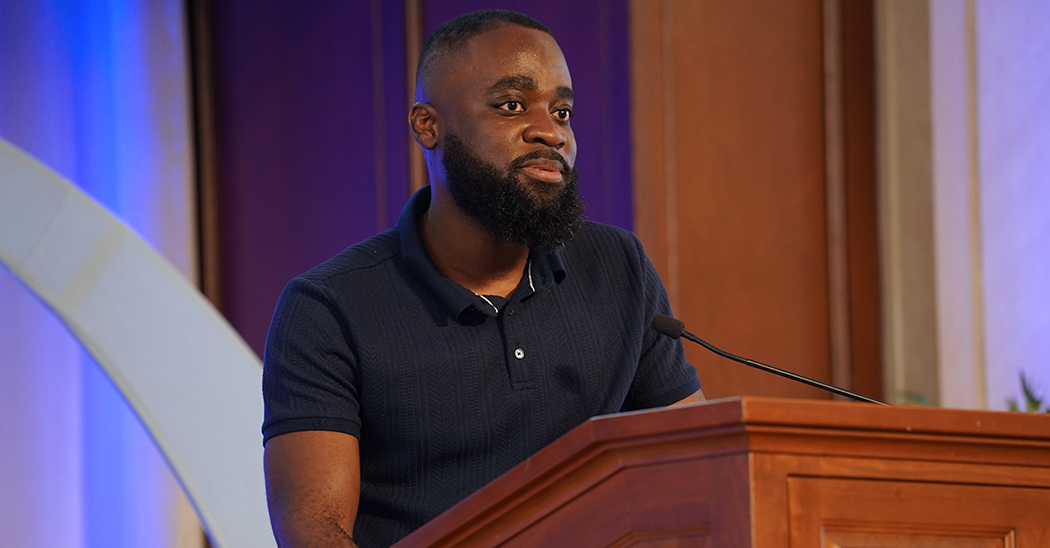
Justice Akuoko-Frimpong, MS ’24
Biostatistics PhD student
By Bob Cunningham
Justice Akuoko-Frimpong grew up in Sunyani, a city in the Brong Ahafo region of Ghana. Akuoko-Frimpong’s family faced economic hardships, like many families in his community.
But his parents never stopped believing in the power of education. They worked tirelessly to give Akuoko-Frimpong and his two brothers—younger brother Franklin and older brother Prince—the best opportunities they could.
“Despite these difficulties, my parents worked tirelessly to provide us with the best educational opportunities,” Akuoko-Frimpong said.
Those early struggles taught him valuable lessons about perseverance and determination that would shape his future.
From a young age, Akuoko-Frimpong dreamed of becoming a doctor.
He admired the hard work and dedication required in the medical profession. His parents encouraged this passion, supporting his interest in health and science throughout his childhood.
For high school, Akuoko-Frimpong moved to Kumasi in Ghana’s Ashanti region, where he attended Osei Tutu Boys Senior High School. After graduation, he earned a spot at the University of Ghana in Accra, the nation’s capital.
There, his path took an unexpected turn. While he didn't become a medical doctor, he discovered something equally meaningful: public health.
“Although my path eventually took a different direction, it ultimately led me to public health, a field where I can still contribute meaningfully to improving health outcomes,” Akuoko-Frimpong said.
PROSPECTIVE STUDENT? Learn more about Michigan Public Health.
I find it incredibly rewarding to use statistical methods to uncover insights that can guide evidence-based decisions.”
Finding his path through numbers
At the University of Ghana, Akuoko-Frimpong earned his Bachelor of Science degree in Statistics with Mathematics in 2021.
He discovered he had a special talent for working with numbers and data. More important, he realized he could use these skills to help people.
This realization led Akuoko-Frimpong to biostatistics—a field that combines mathematics, statistics, and public health.
“I find it incredibly rewarding to use statistical methods to uncover insights that can guide evidence-based decisions,” he said.
After graduating, Akuoko-Frimpong set his sights on continuing his education in the United States.
He chose the University of Michigan for its excellent reputation and world-class faculty.
In 2024, he earned his Master of Science in Biostatistics from the University of Michigan School of Public Health. Now, he’s pursuing his PhD in the same field.
While pursuing his doctorate, Akuoko-Frimpong has also excelled as a teacher. He served as a Graduate Student Instructor (GSI) for several biostatistics courses, including BIOSTAT 521, 522, and 651.
His dedication didn’t go unnoticed.
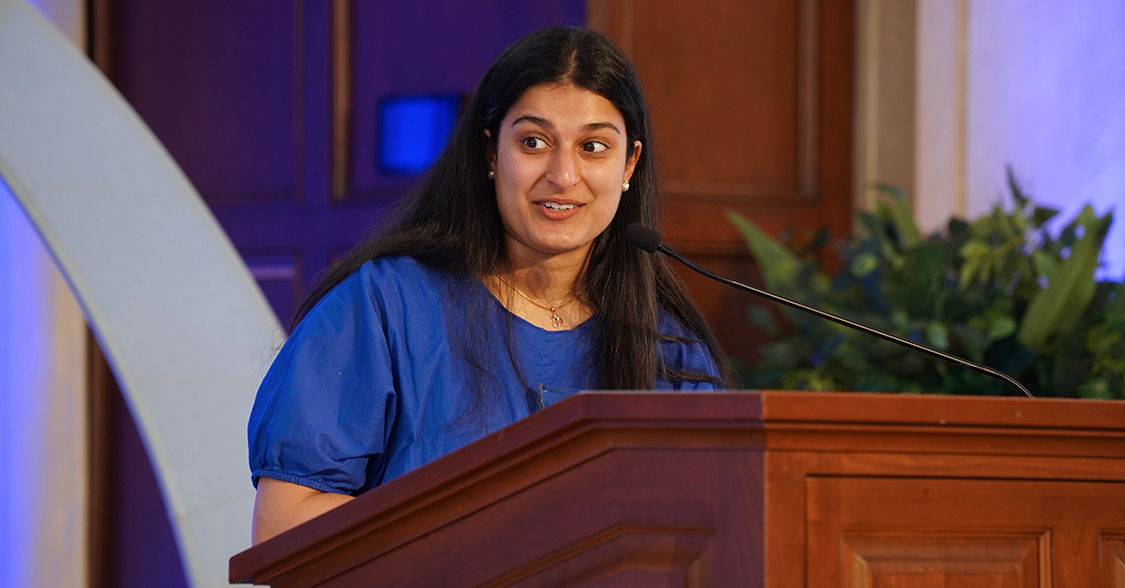
In April 2025, Akuoko-Frimpong received the Outstanding Graduate Student Instructor award during the Public Health Honors awards ceremony. The award recognizes his exceptional teaching abilities and the positive impact he’s had on his students.
“Being awarded the Outstanding Graduate Student Instructor was a tremendous honor,” Akuoko-Frimpong said. “It recognized the hard work, dedication, and enthusiasm I brought to my role.”
The experience allowed him to build lasting connections with both students and faculty, enriching his academic journey.
READ MORE about faculty, students, alumni and staff.
My goal is to apply rigorous statistical methods to analyze complex health data, evaluate interventions, and identify actionable insights that can guide health policy and clinical practice.”
Making a real-world impact
Akuoko-Frimpong’s work extends beyond the classroom.
He’s currently a statistician for the CAPTURE study, which stands for COPD Assessment in Primary Care To Identify Undiagnosed Respiratory Disease and Exacerbation Risk. COPD (Chronic Obstructive Pulmonary Disease) is a serious lung condition that affects millions of people.
Through this research, Akuoko-Frimpong analyzes data that helps doctors identify and treat patients more effectively.
“I find it incredibly motivating to know that the analyses and insights I contribute can have a meaningful impact on how patients are identified, managed, and treated,” he said.
This hands-on experience has strengthened his commitment to using biostatistical methods to solve real-world health problems.
Akuoko-Frimpong credits much of his success to the mentors who have guided him along the way.
His advisor, Susan Murray, professor of Biostatistics, has been particularly influential, providing guidance on both research and personal growth.
Other faculty from Michigan Public Health, such as Veera Baladandayuthapani, the Jeremy M.G. Taylor Collegiate Professor of Biostatistics; Kelley Kidwell, professor of Biostatistics; and Michael Boehnke, the Richard G. Cornell Distinguished University Professor of Biostatistics, supported him while he pursued his master’s program.
Akuoko-Frimpong also gave special recognition to Ezekiel Nii Noi Nortey, associate professor in the Department of Statistics and Actuarial Science at the University of Ghana, who helped lay the foundation for his academic career.
As Akuoko-Frimpong continues his PhD journey, he has clear goals for his career.
He wants to use biostatistics to inform health policy and improve how we understand and treat diseases. His work will focus on analyzing complex health data and evaluating medical interventions.
“My goal is to apply rigorous statistical methods to analyze complex health data, evaluate interventions,” Akuoko-Frimpong said, “and identify actionable insights that can guide health policy and clinical practice.”
SUPPORT research and engaged learning at Michigan Public Health.