Study pairs key air pollutants with home addresses to track progression of lost mobility through disability
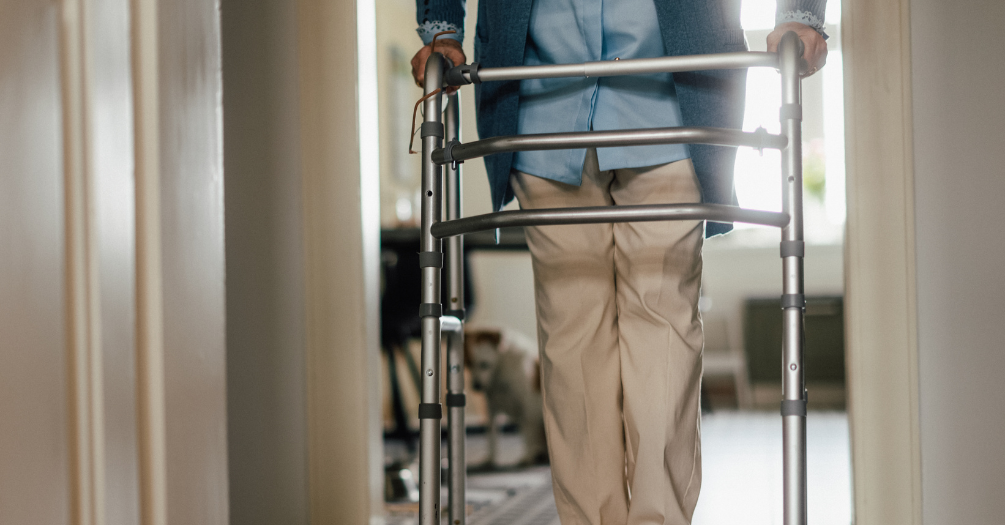
Research traces 10 years of exposure to deteriorating mobility in older Americans
A University of Michigan study has taken a fine-grained, long-term look at residential-area
air pollution and how it relates to deteriorating mobility—and hindered recovery—for
older Americans.
By pairing and comparing the mobility and disability experiences of 29,790 participants
in the national Health and Retirement Study with air quality exposures over 10 years,
a team of veteran environmental health researchers found that people with long-term
exposures were at greater risk of progressing from no physical function limitations
to states of more physical function limitations and full disability over time.
The study zeroed in on nitrogen dioxide, ozone and fine particulate matter, the microscopic
particles floating in the air, left behind by sources such as cars and diesel trucks,
factories and agricultural operations, coal-fired power plants and wildfires.
"We found that higher residential air pollution levels were not only associated with
faster declines in physical function, but also with reduced chances of recovery,"
said Sara Adar, senior author on the study published in JAMA Network Open. Adar is a professor of Epidemiology and Global Public Health at the University of
Michigan School of Public Health.
The pollutants found to be affecting the progression through mobility into disability
have long been linked to inflammation in the body, respiratory disease, increased
dementia risk and the worsening of other chronic illnesses.
"Our results suggest that they may also play a role in worsening physical function
with age," Adar said.
Adar worked on the study with lead author Jiaqi Gao of the University of Wisconsin
and researchers from universities and medical schools across the country.
"Our inquiry is unique in that we considered how exposure may hinder the reverse process
toward recovery instead of focusing solely on the decline in physical functioning,"
Gao said. "Our study strengthens the evidence that air pollution is a modifiable risk
factor for declining physical function, not only for disability but also for mobility."
The study builds on previous research by following individuals' progression from health
to limited mobility and disability, or in some cases, back to better health.
"Our study shows that cleaner air may help people maintain physical function and even
recover from setbacks, allowing them to stay stronger and more independent as they
age," Adar said."We believe our research emphasizes that clean air is an important
contributor to healthy aging."
The findings have potential clinical and societal significance given that the cost
to the government to manage physical disabilities runs an estimated $400 billion annually,
she said.
"Exposure to air pollution is not only a physical and emotional burden, it's also
an economic one, increasing health care spending for the individuals affected, their
families and taxpayers through higher Medicare spending, especially for people already
with high health care needs," said Adar, whose research on air pollution and health care spending by older adults was recently published
in Environment International.
Researchers used responses from participants in the University of Michigan's landmark
Health and Retirement Study, a large, long-running U.S. research study that tracks
health, aging and economic conditions of adults 50 and older. The study is based at
the University of Michigan Institute for Social Research and funded by the National
Institute on Aging.
To identify people living with mobility impairment, the researchers used study participants'
responses to questions on difficulties performing any of five tasks for more than
three months due to health problems: walking across a room, walking a block, walking
several blocks, climbing one stair, climbing several stairs.
To identify participants living with disabilities, they looked at survey questions
that asked participants to self-report difficulty in any of six tasks over three months
due to health problems: bathing, eating, walking, dressing, toileting, and getting
in and out of bed.
Co-authors on the study: Carlos Mendes de Leon, Georgetown University; Adam Szpiro and Joel Kaufman, University of Washington; Jennifer Weuve, Boston University; Kenneth Langa, Richard Hirth, Kelly Bakulski, Jen D'Souza, Jessica Faul, University of Michigan; Jinkook Lee, University of Southern California; Boya Zhang, Harvard University; Kayleigh Keller, Colorado State University.
Study: Air Pollution and the Progression of Physical Function Limitations and Disability and Aging Adults. JAMA Network Open. DOI: 10.1001/jamanetworkopen.2025.58699
Media Contact
Kim North Shine
Senior Public Relations Representative, Health Sciences
Michigan News
[email protected]
313-549-4995