Finding clarity in numbers and community

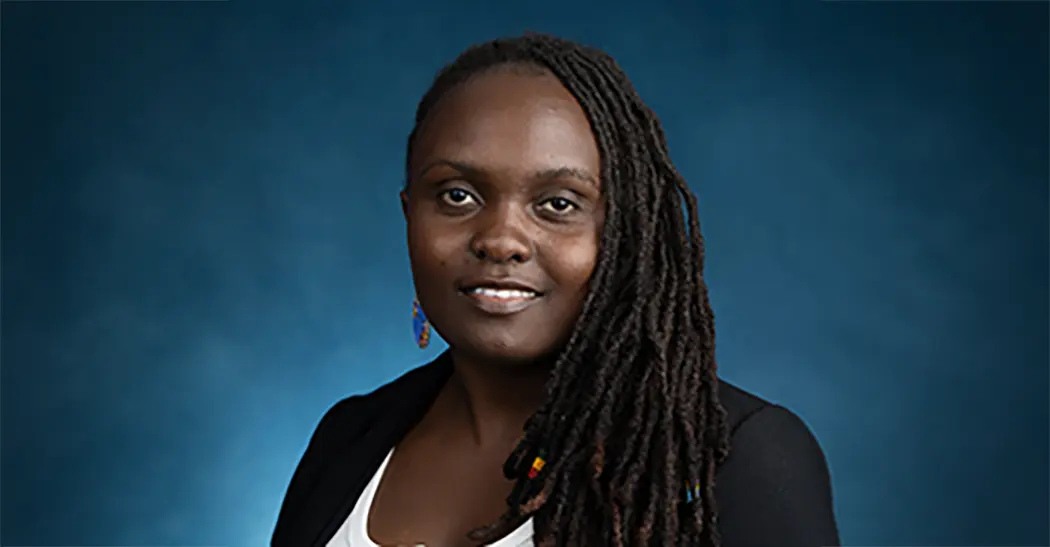
Liying Chen, MS ’20, PhD ’26
Biostatistics
By Bob Cunningham
Before she ever heard the term “biostatistics,” Liying Chen found herself drawn to helping people when she studied clinical medicine at Fudan University in her native Shanghai, witnessing firsthand the daily struggles of patients.
“I really wanted to help people who were sick,” Chen said. “But it was very emotional to see people suffer.”
The pain she felt during hospital rotations led her to reconsider her path.
“I realized public health could be a way to help patients from a different angle,” Chen said. “Not everyone can be a first responder, and I wanted to find my own way to contribute.”
Now, as she prepares to graduate with a PhD in Biostatistics from the University of Michigan School of Public Health, Chen has transformed her story—and her skill set—into meaningful change.
PROSPECTIVE STUDENT? Learn more about Michigan Public Health.
From medicine to math
Chen’s leap from clinical medicine to statistics was daunting. When she first arrived in Ann Arbor in 2018, she said she “had to learn everything from zero.”
New concepts, new language, and learning to code made those early days challenging.
“I never did programming during my undergrad,” she said, “so everything was new.”
After earning her Master of Science in Biostatistics in 2020, Chen stayed in Ann Arbor to pursue her PhD in Biostatistics. The jump from clinical medicine to mathematical models and coding was tough for her.
“Transferring from a totally non-biostats program to a stats program was initially suffering a lot,” she said.
But the strength of the Biostatistics department, and mentors like Veera Baladandayuthapani, the chair of the department, has made all the difference.
“The whole department is so friendly and nice,” Chen said. “They encourage a lot of diversity and give us opportunities to celebrate our own cultures and learn from each other.”
Baladandayuthapani, who also served as Chen’s advisor, helped her learn how to go beyond textbook answers.
“Veera is a very nice, kind advisor. He has guided me through my whole PhD and even during my master’s times,” she said. “For PhDs, you need to think about how your model can really help with scientific problems, and find your own ways to solve them, not just using the textbook. Veera really helped me build the path for that.”
With this guidance, Chen was able to overcome her early struggles.
“Liying is a rare and precocious talent,” Baladandayuthapani said. “Her journey from studying medicine in China to a PhD in Biostatistics at Michigan Public Health is a tribute to her incredible resilience and commitment. Her dissertation is anchored in some of the most critical and timely problems in cancer research today.
“She has produced an outstanding body of work, but more than that, she has been an absolute joy to mentor. I am immensely proud of the researcher she has become and am truly excited to see her embark on her career. She enters the professional world uniquely equipped, carrying with her the heart of a physician and the vital, sharp lens of a data scientist.”
Liying is a rare and precocious talent. Her journey from studying medicine in China to a PhD in Biostatistics at Michigan Public Health is a tribute to her incredible resilience and commitment. Her dissertation is anchored in some of the most critical and timely problems in cancer research today.”
— Veera Baladandayuthapani, chair of the Department of Biostatistics
Bringing science to life
Chen’s research is about turning numbers into life-changing insights. Her projects reach across cancer genomics, mental health and substance use disorders. In one study, she explored Michigan prescription data to understand how opioid treatments — especially buprenorphine — changed over time and in different locations.
“I worked with clinical teams to see where treatment was working and where more support was needed,” she said. “It’s about seeing the story behind the numbers.”
She’s also developed tools for doctors to better understand how medications are used in mental health settings.
“We had data from millions of patients,” she said. “I built programs to clean and organize it so doctors could see which medicines were most common and where mistakes might happen.”
Chen harnessed advanced artificial intelligence tools to match medication names and connect scattered records.
“It was a challenge, but it made a big difference for clinical teams and for patients,” she said.
In her depression research, Chen worked with digital mental health treatments. She applied existing methods for finding the right treatment for each patient, using computers to analyze information and spot patterns. “
"It’s about personalizing care, so every patient gets what they need to improve,” she said.
Chen’s cancer research uses photos of tissue samples to study gene activity inside tumors.
“I designed models that help scientists see which genes are connected, and which ones might be key players in the disease,” she said.
The goal is to make sense of complicated data and help doctors target treatments more effectively.
I wouldn’t be where I am today without the support, challenges, and friendships I found here at Michigan Public Health.”
— Liying Chen
Community and connections
While Chen loves digging into data, it’s the community she’s built that stands out.
“The best part of the Biostatistics program is the diversity,” she said.
She’s made friends from all over the world—India, Colombia, the United States—trading recipes, learning games, and celebrating holidays.
“We made dumplings for Lunar New Year, tried Indian food, played cornhole at Halloween parties,” Chen said. “They are experiences I wouldn’t have had if I stayed in Shanghai.”
And Ann Arbor, with its friendly neighborhoods and campus traditions, became more than just a place to study.
“I've been here for almost eight years now,” Chen said. “It’s my hometown in the US—I feel at home here.”
She still remembers attending her first Michigan football game: “I didn’t understand all the rules, but I loved the vibe—everyone cheering together.”
READ MORE about faculty, students, alumni and staff.

The power of real-world research
Chen’s internship at Eli Lilly has changed the way she sees statistics. There, she has used her skills to help develop new cancer medicines, building models to predict which patients would benefit most.
“Working at a pharmaceutical company was different from academia—the data was real and the stakes were high,” she said. “I saw how our work could help patients for real.”
Her efforts haven’t gone unnoticed. Chen has won several awards for her research presentations and software tools, including the Distinguished Student Paper Award at the Eastern North American Region (ENAR) symposium.
“I made a software package for researchers to use, and even created a website with dynamic visualizations,” she said. “Making science easier to understand is part of my job.”
As graduation approaches, Chen knows where she’s headed.
“I want to keep working in the pharmaceutical industry, applying my statistical skills to support drug development and patient care,” she said.
For her, public health is about people and possibility, making complex science clear and useful, building bridges between cultures, and showing that data can save lives.
“I’m so glad I made these choices,” Chen said. “I wouldn’t be where I am today without the support, challenges, and friendships I found here at Michigan Public Health.”
SUPPORT research and engaged learning at Michigan Public Health.