Epidemiology Results

Illustration of people working.

Returning to Work Safely in Michigan and across the US

Q&A with Aurora Le

As the US slowly reopens the economy, a variety of new safety measures will be needed to ensure worker safety, from engineering and administrative interventions for entire facilities down to personal protective equipment. These measures are not meant to hinder economic recovery but rather to reduce the incidence and prevalence of infectious disease to protect American workers and their families.

Elderly man holding a cordless telephone

Virtual Senior Center Helps Older Adults in Detroit Connect While Social Distancing

Low-income older adults and those with serious health problems are particularly vulnerable to negative health and social impacts caused by social distancing during the coronavirus pandemic. Researchers from the University of Michigan and partner, Methodist Children’s Home Society, are piloting a virtual senior center that offers enrichment and educational programs via phone to help combat the isolation.

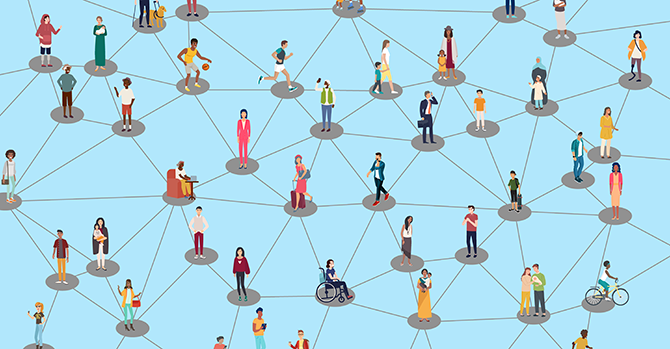
Illustration of people coming into contact with one another.

Contact Tracing: Use Volunteers or Paid Public Health Corps?

Q&A with Angela Beck

The House of Representative plans to introduce a bipartisan bill that would create a National Public Health Corps similar to AmeriCorps that would hire hundreds of workers to help conduct contact tracing as the US moves to reopen its economy. Angela Beck discusses the idea of such a workforce.

Lorem ipsum

Public Health Surveillance: Immunity, Testing, and Contact Tracing

Q&A with Abram Wagner

Long before we could sequence a virus’s genome in a matter of weeks, we used public health tactics like contact tracing to sort out the movement of a disease in a population. Contact tracing is one of the “traditional” tools of epidemiologists. Today, we have more public health surveillance tools at our disposal, and we’ll need both the old and the new to bring COVID-19 under control.