Michigan Public Health celebrates excellence with fifth annual Public Health Honors
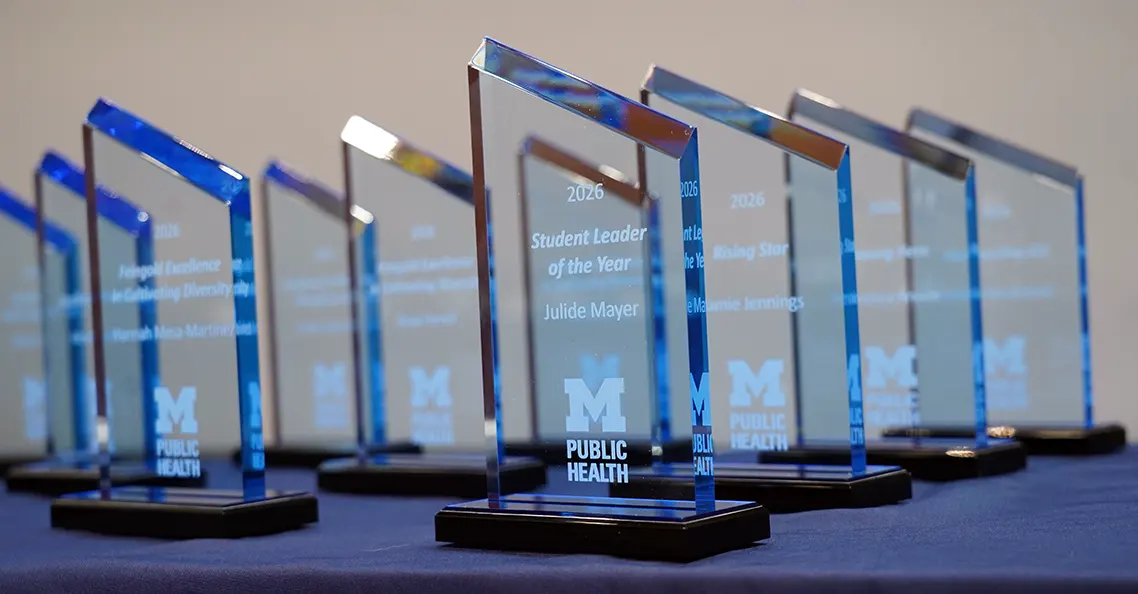
ANN ARBOR — Students, faculty and staff from the University of Michigan School of Public Health were recognized April 22 during the fifth annual Public Health Honors held in the Paul B. Cornely Community Room.
The event honored 16 individuals and student organizations for outstanding work in teaching, research, community service, public engagement and leadership.
“We are here to celebrate excellence in scholarship, teaching, service, leadership, partnership and the steady day-to-day work that makes an institution—and a field—move forward,” said Lynda Lisabeth, interim dean of Michigan Public Health. “Our mission is pursuing a healthier, more equitable world for all. That mission doesn’t change when conditions get harder—it becomes more urgent.
“To our honorees, thank you for raising the bar—and for doing it in ways that bring others with you. Public health is a team sport, and this team is stronger because of you.”
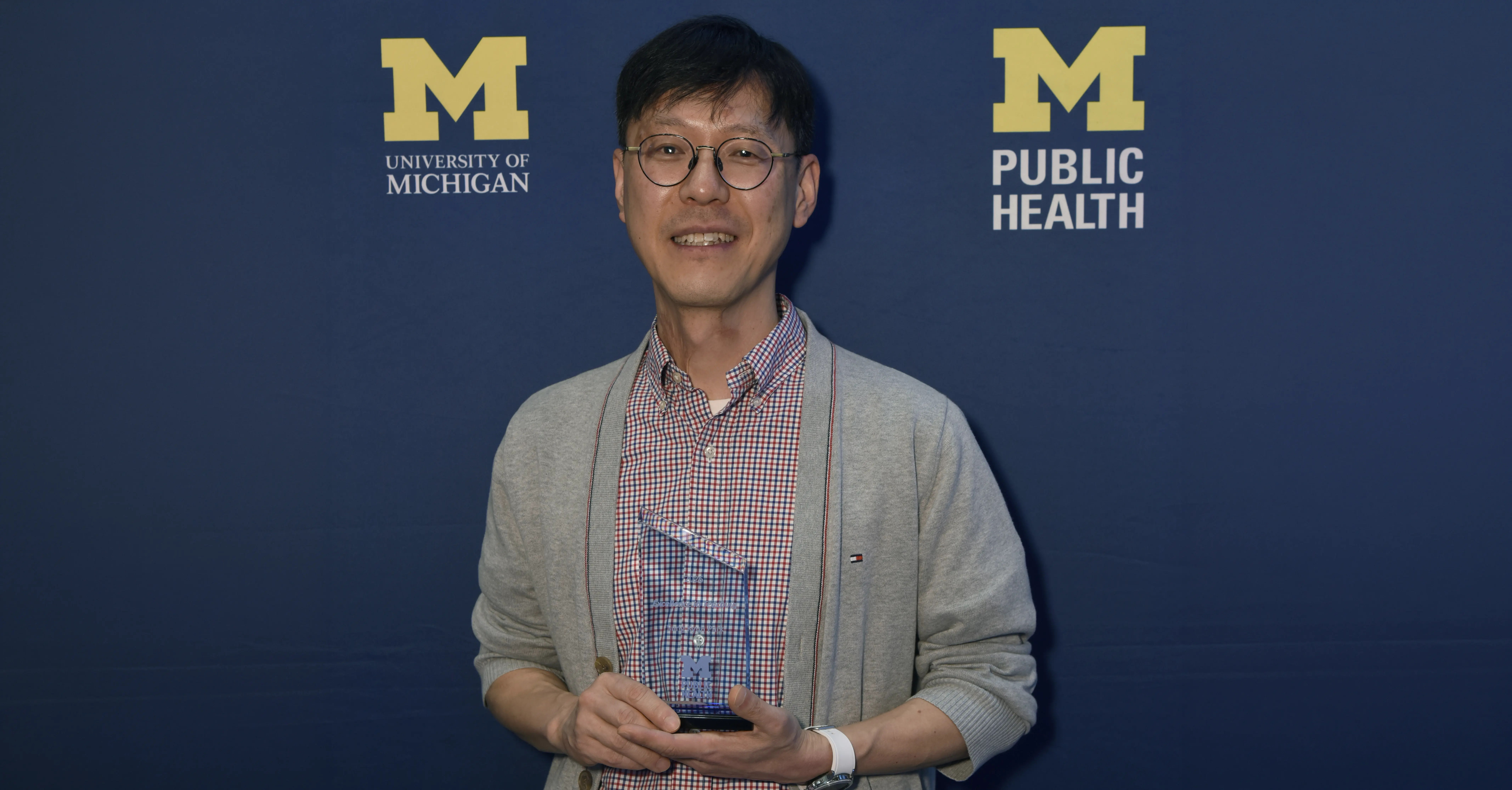
Excellence in Teaching Award
Sung Kyun Park, professor of Epidemiology and Environmental Health Sciences, received the Excellence in Teaching Award.
Park has spent 15 years at Michigan Public Health building courses that prepare students to tackle some of public health’s most complex analytical challenges. He developed two widely used graduate courses—Data Analysis for Environmental Epidemiology (EPID/EHS 675) and Modern Statistical Methods in Epidemiologic Studies (EPID 815)— specifically to fill gaps he identified in both the master's and doctoral curricula.
His course EPID 815 has become especially popular among PhD students across multiple departments, including Epidemiology, Environmental Health Sciences and Nutritional Sciences. The course was originally co-taught with a colleague in Biostatistics to encourage collaboration between the two disciplines. Park has continued offering it on his own, keeping its content current so students can apply advanced methods directly to their dissertation research. A central focus of the course is causal mediation analysis—a tool that can help identify health disparities and design more effective public health interventions.
Park has mentored eight postdoctoral fellows, served as chair or co-chair for 13 doctoral students, sat on the dissertation committees of 33 more, and guided more than 50 master’s students through their theses or capstone projects. Students describe him as approachable and genuinely invested in their success—the kind of professor who welcomes anyone who stops by his office with a complicated question, whether or not they are formally his advisee.
He currently chairs the Department of Epidemiology Curriculum Committee, where he has led efforts to modernize the doctoral curriculum, expand hands-on practice experiences for MPH students and launch an accelerated master’s program for motivated undergraduates. Student input has been part of each of those efforts.
“Dr. Park’s ability to motivate his students and promote enthusiasm for his subject matter make him a prime candidate for this award,” the Epidemiology Doctoral Student Organization wrote in its nomination. “By equipping his students with advanced analytical skills and a collaborative mindset, Dr. Park ensures they graduate ready to tackle real-world public health issues.”
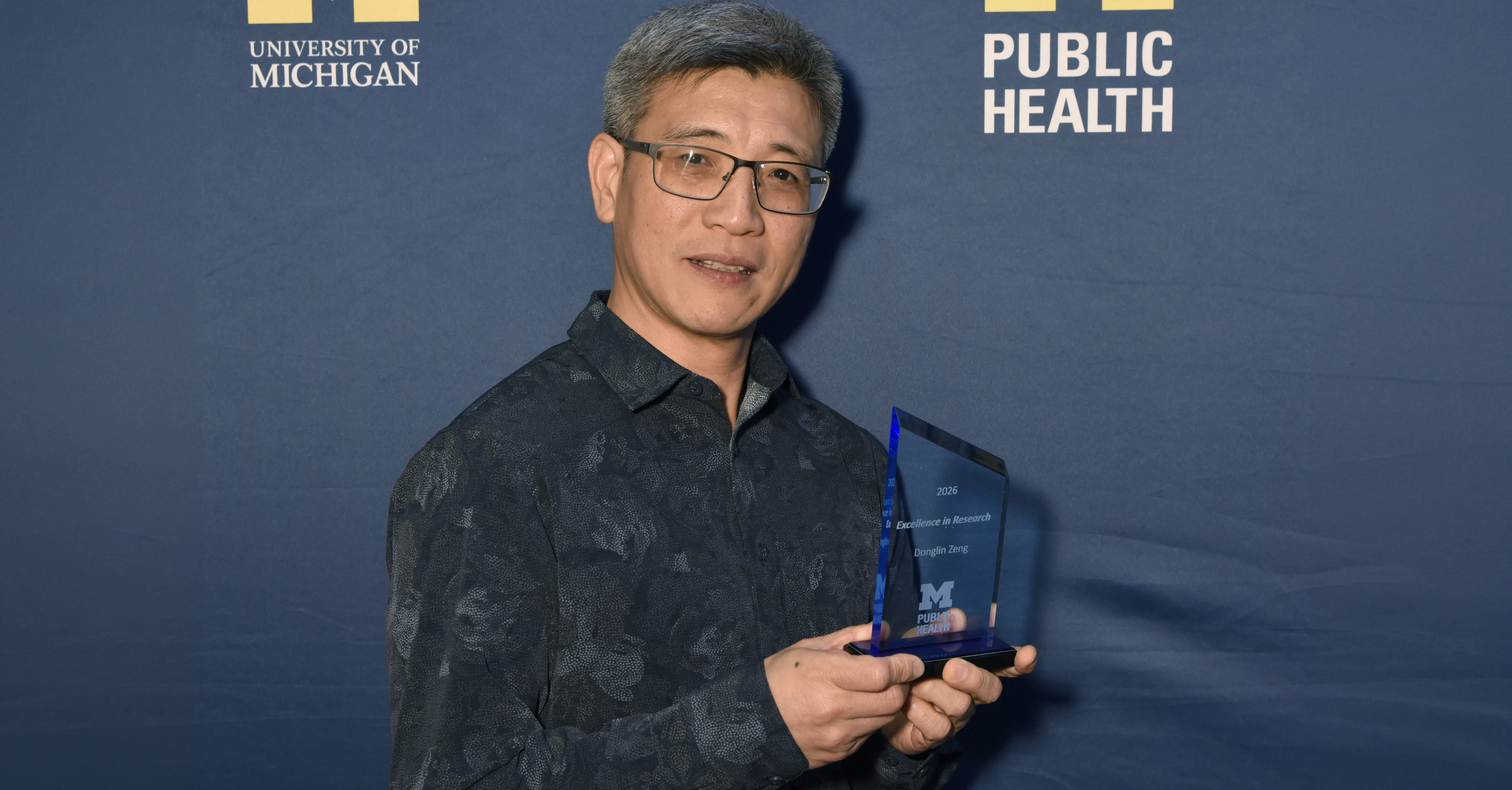
Excellence in Research Award
Donglin Zeng, professor of Biostatistics, was honored with the Excellence in Research Award. Since joining Michigan Public Health in 2023, Zeng has quickly established himself as one of the leading figures in his field.
His research sits at the intersection of statistics, machine learning and precision medicine—work that helps doctors and researchers make better decisions about how to treat individual patients. He has published more than 350 articles, his work has been cited more than 17,000 times, and he holds an H-index of 65, a measure of sustained research impact.
Among his most significant contributions is a 2012 paper that introduced machine learning techniques into the process of identifying the best treatment for individual patients—work that has since been cited more than 1,000 times and helped launch an entire wave of follow-up research.
Zeng’s work has also molded public health policy. His research on the long-term effectiveness of COVID-19 vaccines contributed to findings published in three of medicine's most respected journals: the New England Journal of Medicine, JAMA and The Lancet.
“Dr. Zeng is an outstanding biostatistical and public health data scientist who is generating transformative and highly collaborative research,” said Veera Baladandayuthapani, chair of the Department of Biostatistics. “This, coupled with his dedicated mentorship and extensive professional leadership, significantly advance public health research.”
Excellence in Practice Awards
Amy Schulz, University Diversity and Social Transformation Professor in the Department of Health Behavior and Health Equity, received the faculty Excellence in Practice Award.
Schulz has spent nearly 30 years building genuine, lasting partnerships between the University of Michigan and communities in Detroit. Her approach, known as community-based participatory research (CBPR), treats community residents and organizations as equal partners in the research process, not just subjects of study.
A centerpiece of her work is the Healthy Environments Partnership, which she helped create and lead from 2000 to 2020. The partnership brought together community groups, health agencies and academic researchers to develop programs that made it easier for Detroit residents to be physically active and eat well. One outcome was the Walk Your Heart to Health program, a community-led walking group initiative that has been recognized as an evidence-based approach to improving physical activity in predominantly African American and Latino neighborhoods.
Between one-third and 90 percent of her grant funding over the years has gone directly to community partners. She has mentored 43 doctoral students, 21 of whom now hold faculty positions, with others working at the NIH, CDC and FDA.
Amanda Dudley, center manager for the Center for the Assessment of Tobacco Regulations in the Department of Epidemiology, received the staff Excellence in Practice Award.
Since joining the department’s Practice Committee in 2024, Dudley has become a driving force behind community service efforts, organizing volunteer events with Food Gatherers, Ann Arbor parks and the Growing Hope Community Garden. She has also led her department’s participation in the University of Michigan–Flint “More Than a Day” MLK Day event—and when supplies ran short one year, she used her own money to keep the work going.
This year, she took it a step further, organizing departmental fundraising so her unit could contribute financially as well. The group helped make more than 75 no-sew blankets for the Flint community.
Dudley also built a partnership with the Washtenaw Elementary Science Olympiad that created Applied Practice Experience opportunities for five epidemiology students. When transportation was a barrier to participation, she rented a van and drove people herself.
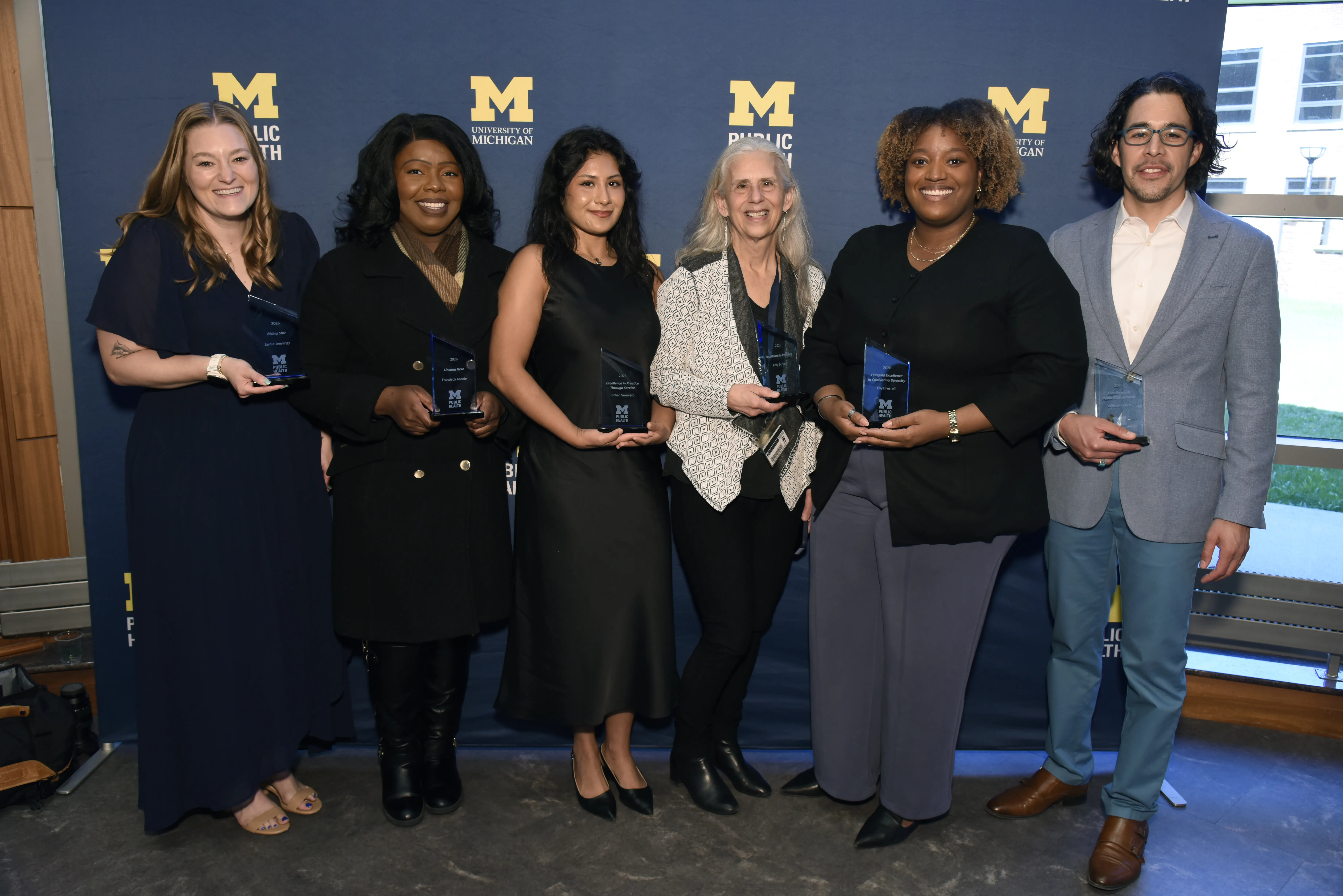
Eugene Feingold Excellence in Cultivating Diversity Awards
Three members of the Michigan Public Health community were recognized with the Feingold Excellence in Cultivating Diversity Award, which honors those who show extraordinary dedication to building a more inclusive community.
Lex Eisenberg received the faculty award for creating learning environments that challenge students to think critically about systems of power and health and leading Detroit housing justice research through the Eviction Machine project.
Hannah Mesa-Martinez received the staff award for deep, trust-based partnerships with Detroit communities, long-term diversity leadership within the school and service as a volunteer birth doula providing culturally responsive care.
Koya Ferrell received the student award for founding and leading the Black Graduate Student Association, strengthening pipelines for underrepresented students through national recruitment efforts and contributing research on racial equity in healthcare.
Additional honorees
- Excellence in Public Engagement: Bill Lopez
- Student Leader of the Year: Julide Mayer
- Outstanding Graduate Student Instructor: Molly Macdonald
- Excellence in Practice Through Service: Esther Guerrero
- Rising Star: Jamie Jennings
- Unsung Hero: Fransisca Anozie
- Student Organization of the Year: Epidemiology Student Organization
- Outstanding Event of the Year: Climate Preparedness in Southeast Michigan, hosted by the Environmental Health Student Association
- Community Engagement Award: Kidney Disease Screening and Awareness Program
- Rising Organization: OutPH